
NEWS FROM RIGHT HERE
New Signage to [Re]Discover the History of District Central
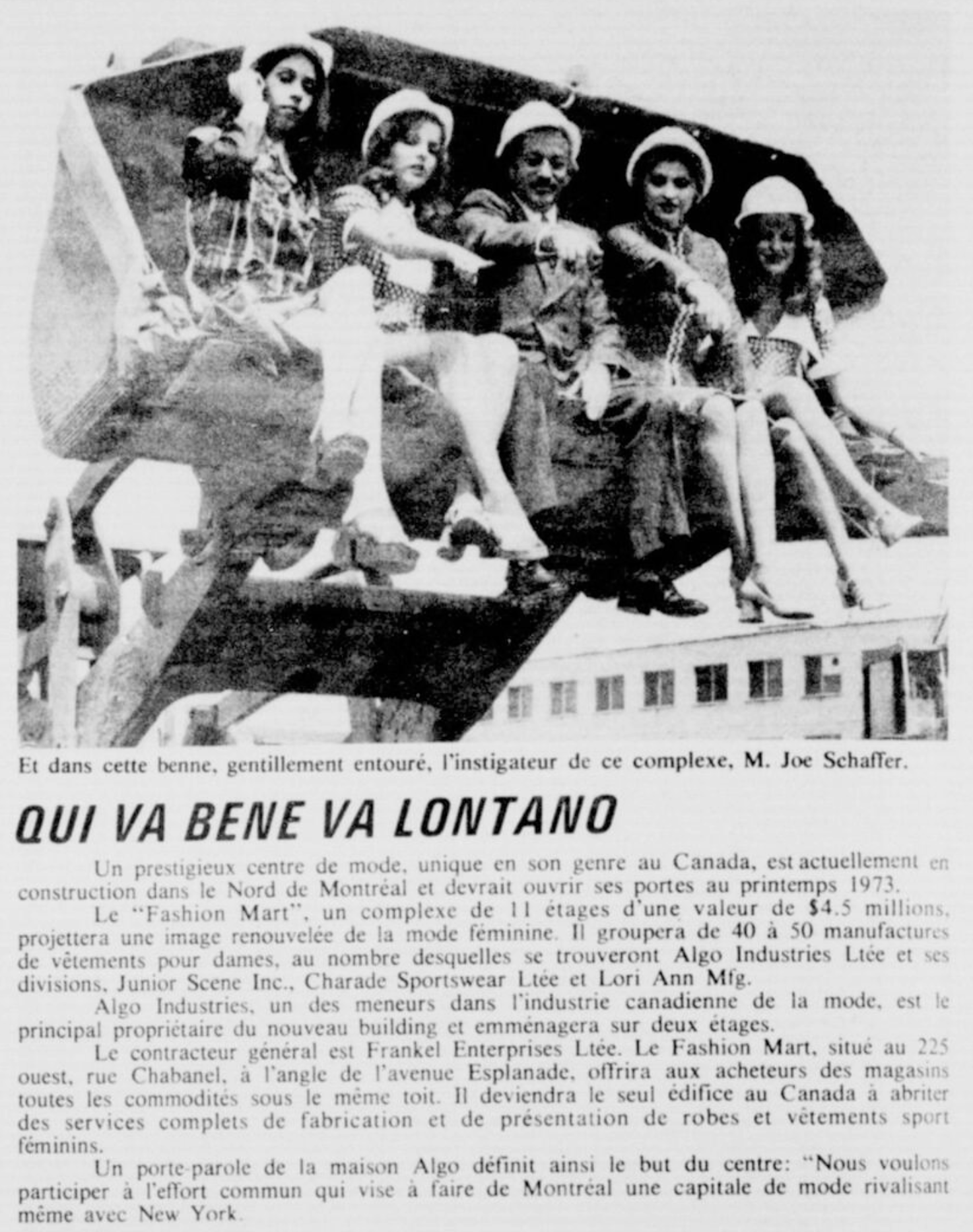
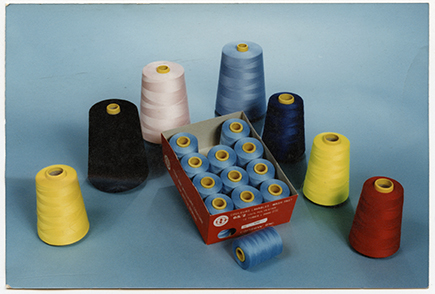
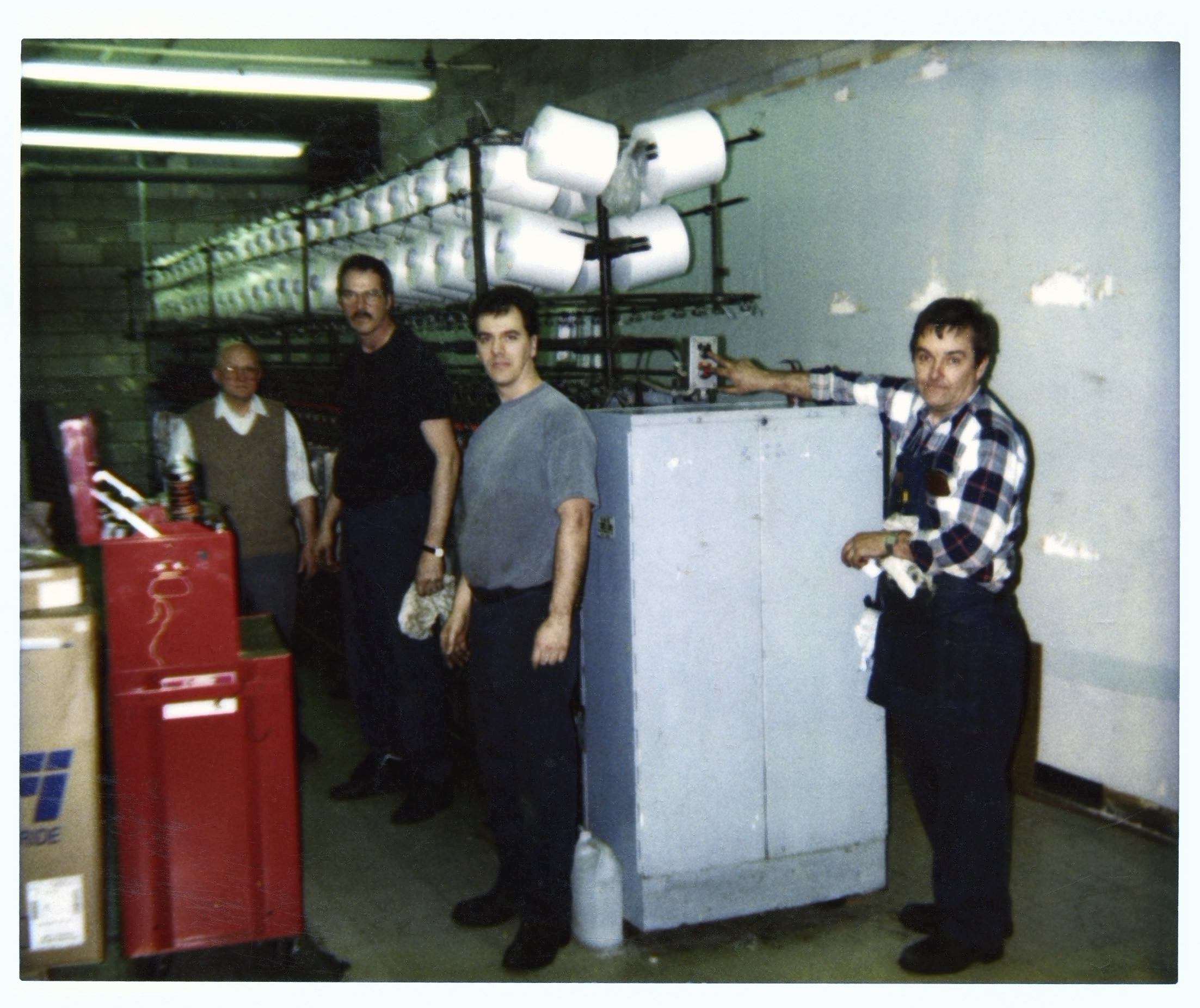
A 1973 newspaper clipping announcing the construction of Fashion Mart, a prestigious 11-storey complex at 225 Chabanel Street West, designed to accommodate up to 50 women’s clothing manufacturers. The illustration features the project’s instigator, Joe Schaffer, sitting in a dumpster, “kindly surrounded” by four women wearing skirts and high heels. Also featured, a retro-style box of thread produced by Cansew, which moved its factory to Chabanel in 1968, and a massive thread-winding machine.
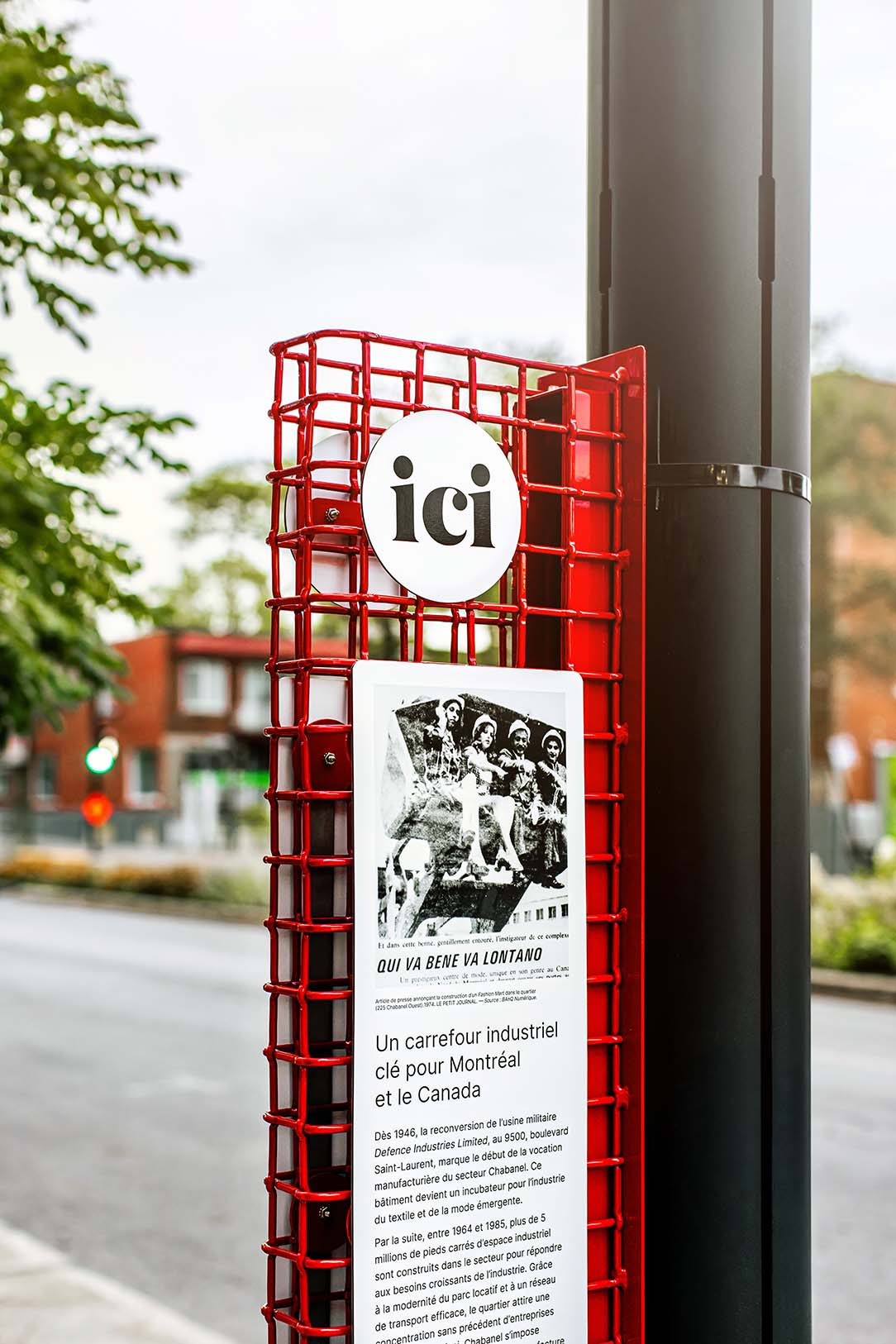
A glance at this new interpretive panel highlighting the area’s industrial history, installed in front of 99 Chabanel Street West, is enough to transport you to another era. Yet the history of this neighbourhood, now known as District Central, remains to be discovered by many — including the new entrepreneurs who are choosing to make it their home.
For the SDC District Central, which has been in existence for eight years, the installation of these signs marks a pivotal moment.
“There were four attempts to revitalize the neighbourhood that did not come to fruition before the creation of SDC District Central, so we were starting from a long way back,” says Executive Director Hélène Veilleux. “The core of our work is to bring together the various stakeholders and encourage them to collaborate on impactful projects that benefit the territory and their businesses. It is behind-the-scenes work. The installation of these panels in August, highlighting the neighbourhood’s heritage, is one of the first physically visible and permanent actions undertaken by SDC District Central.”
A neighbourhood in transformation
The new signage is part of the District Central Signature Intervention Plan, located in the Ahuntsic-Cartierville borough. Covering a three-square-kilometre area stretching from Saint-Laurent Boulevard to Highway 15, and from Highway 40 to Sauvé Street, this neighbourhood has a long and rich history in the textile and manufacturing sectors. In recent years, however, businesses in fields such as design and technology have also begun establishing themselves here.
It is also Montréal’s fourth-largest employment hub, with approximately 2,100 businesses generating more than 25,000 jobs. This number is expected to grow to 40,000 in the coming years. The neighbourhood’s residential fabric is also gradually expanding, with the construction and planning of several housing projects aimed at meeting workers’ needs and enhancing the area’s commercial appeal.
“The SDC team’s ability to engage the private sector and foster collaboration with public partners is generating momentum and delivering positive results quickly, because these projects are being carried forward by the entire District Central community,” explains Hélène Veilleux
It is precisely to attract and retain businesses, as well as the various communities that work and live in the area, that the SDC District Central developed its Intervention Plan. The plan was made possible in part through a grant of more than one million dollars from the Québec government’s Fonds signature métropole, aimed at maintaining Montréal’s competitiveness. More specifically, it seeks to strengthen the neighbourhood’s brand identity by supporting its economic, cultural and social growth. With this support, District Central will be able to assert its identity and enhance the experience of those who work, live and visit there.
In addition to the historical signage, the Plan includes landscape improvements, public art installations and street furniture projects. To enhance initiatives in these areas, SDC District Central successfully secured funding agreements with businesses and property owners, allowing them to be directly involved in the implementation of transformative projects. Several projects have already been completed, including La Prairie Louvain, the artwork by Marlon Kroll on the construction fence surrounding the Anima residential project, and the development of a new public space, Ruelle L’Oasis.
A rigorous process behind the creation of the signage
The development of this new signage is the result of extensive research and consultation. “Since much of District Central’s historical knowledge has not been officially documented, we had to meet with business leaders who have been established in the area for decades, as well as residents who experienced the neighbourhood’s golden age,” explains Marc-André Carignan, who has been responsible for District Central’s Signature planning initiatives for the past year. “Because many of these people are between 70 and 90 years old, we had to act quickly.”
SDC District Central commissioned the Société d’histoire d’Ahuntsic-Cartierville and PASSERELLES to carry out this work. The project was enhanced through additional photographic research and calls for contributions on social media.
Ultimately, four historical themes were selected for this first phase of the panel rollout. In addition to the panel on the textile industry’s history, Chabanel Street West (in front of 555) now features one highlighting the Fashion District, while the panel at the corner of Parc Avenue explores the contribution of immigration to the neighbourhood’s vitality. The panel on the war effort was installed in front of the vacant lot where the Montreal Works munitions factory once stood, near Barista Café at 111 Louvain Street West.
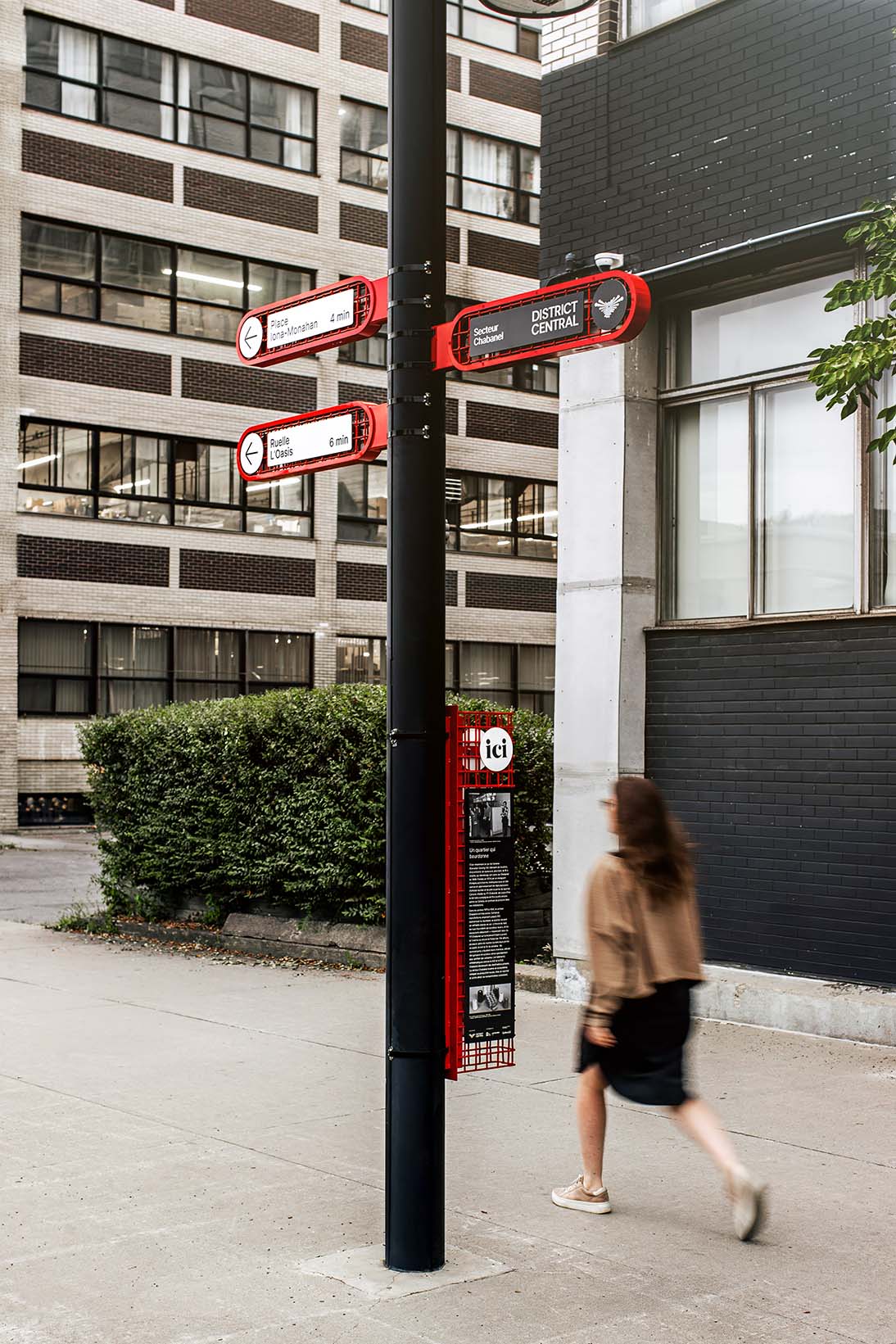
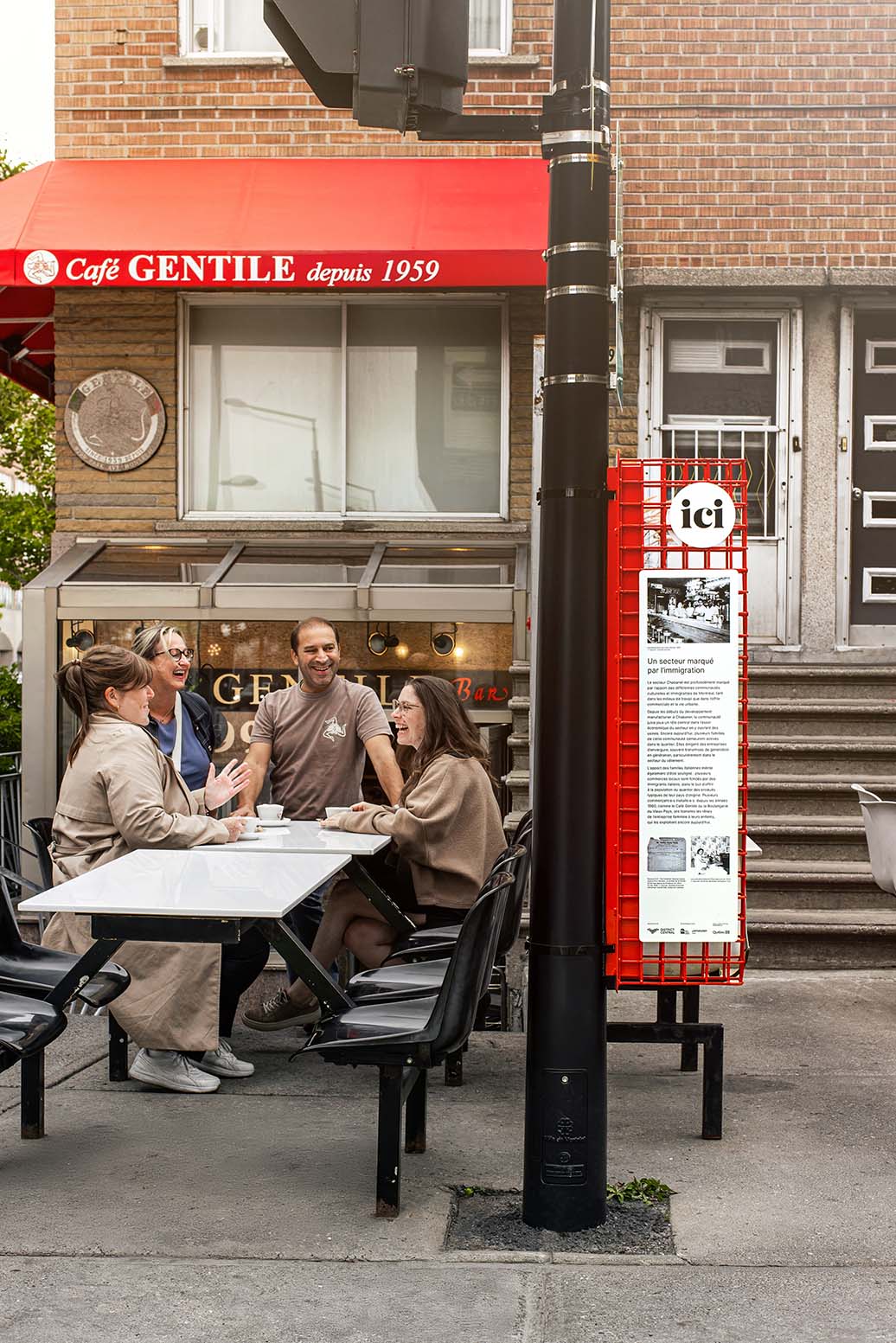
The information is displayed on a brick-red metal grid structure attached to streetlights, without requiring any holes to be drilled, allowing the panels to be easily removed and maintained. In addition to the historical panel, the SDC installed directional arrows on the same structure, guiding visitors toward nearby points of interest.
“Several monumental buildings make up District Central, where manufacturing companies, start-ups, workers and residents coexist,” explains Hélène Veilleux. “Ensuring accessibility to the neighbourhood through all modes of transportation is an absolute priority for us. We wanted to create human-scale signage that would give people a sense of safety in this vast environment and encourage them to walk around and discover the neighbourhood.”
The response across the territory was immediate. “The panels showcase people’s achievements beyond the walls of their own buildings,” says Hélène Veilleux. “They are proud, moved and happy to see that, at last, the neighbourhood’s heritage is being recognized in a place that has been neglected for many years.”
The SDC District Central intends to continue its signage efforts by expanding into other parts of the neighbourhood, including the Marché Central and Sauvé sectors.
Source : Journal des voisins - partner content
This article is adapted from the original text by Martine Letarte, published in Journal des Voisins.
Read the original article : Une nouvelle signalétique pour (re)découvrir l’histoire du District Central
From the Shadows to Influence: The Rise of District Central in 10 Years
PHOTO BY ÉMILIE DELORME, FOR SDC DISTRICT CENTRAL Inauguration of the Ruelle L'Oasis At the heart of Ahuntsic-Cartierville, the Société...
Lire la suite
When Urban Art Meets Commercial Development
Artworks taking over the urban landscape, from the facades of buildings to construction site hoarding? You're going to be seeing...
Lire la suite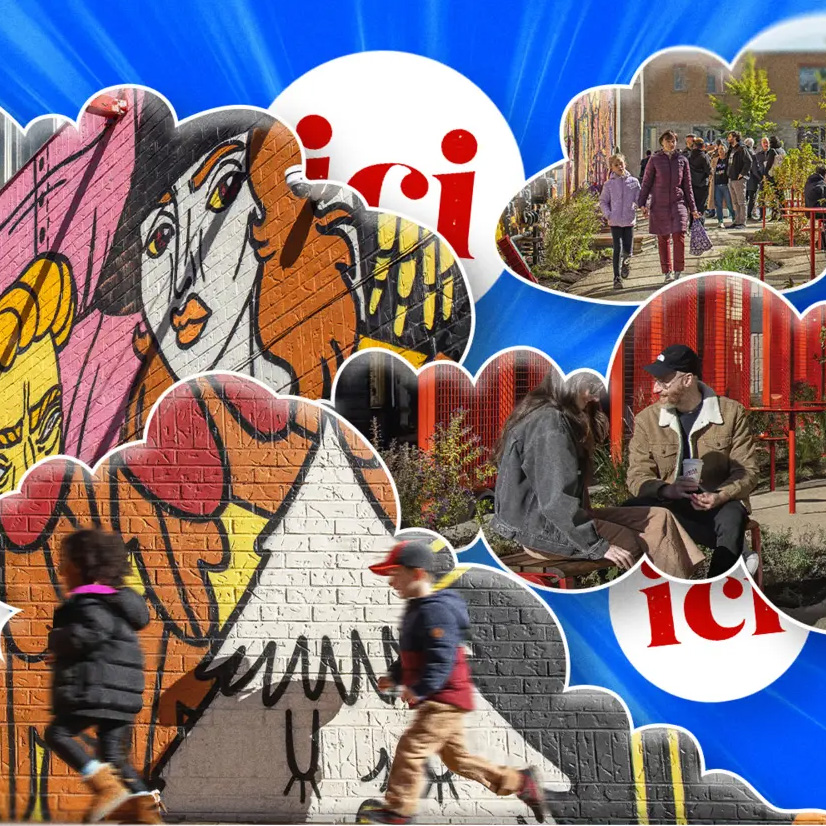
An Alley Unlike Any Other (And That’s a Good Thing)
Imagining the Montreal of tomorrow with the Ruelle L'Oasis, in the heart of the District Central. URBANIA and the SDC...
Lire la suite