
NEWS FROM RIGHT HERE
May 30, 2026
Urban Logistics, a Driver of Resilience
In a metropolis like Montréal, where the diversity of its geographic areas sometimes creates competing demands for space, understanding and using urban logistics as a planning tool is essential to effective land-use planning.
The key question, in fact, is whether Montréal can still plan for a productive city, and under what conditions.
Too often, the transformation of industrial spaces into mixed-use or residential areas is seen as progress in itself, without fully considering the repercussions for the city’s productive functions.
This divide between residential development and the needs of the business community is particularly pronounced in northwestern Montréal, according to the SDC District Central, located in the borough of Ahuntsic-Cartierville.
It is worth noting that District Central, designated a Metropolitan Innovation Zone (ZIM) by municipal authorities, is one of Montréal’s last central manufacturing hubs. The area faces significant challenges—including land-use pressures, the coexistence of different uses and congestion—arising from its diverse functions.
The district is home to approximately 2,100 businesses and over 25,000 jobs in a largely industrial built environment whose operations depend on essential daily logistics—often invisible, but deserving of greater consideration.
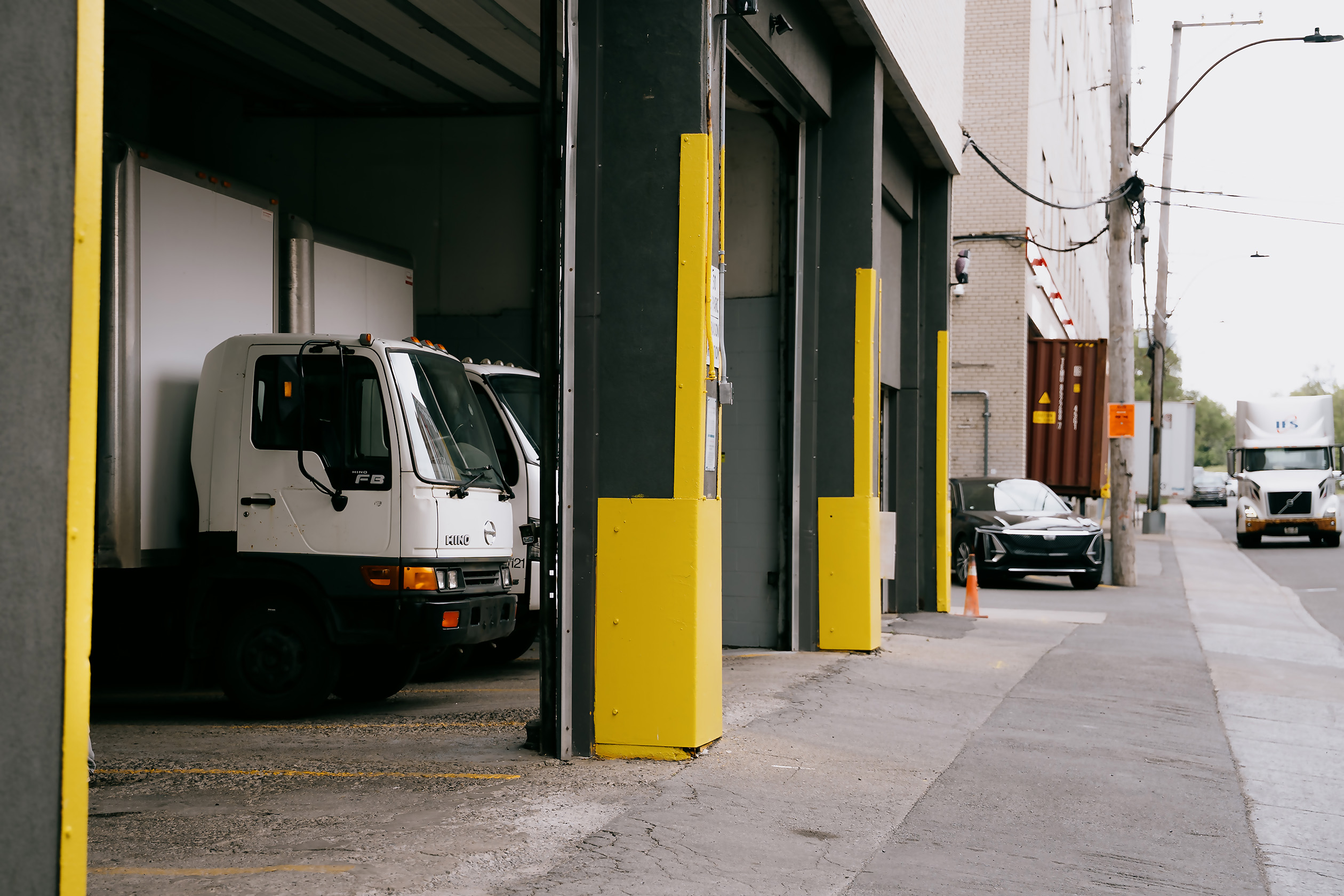
Photo: Branden Desormeau — Loading dock on Meilleur Street in District Central. An essential logistics infrastructure supporting the day-to-day operations of urban manufacturing businesses.
Urban Logistics as a Driver of Economic Resilience
Urban logistics encompasses all the activities required to supply a city: warehousing, the movement of goods, deliveries and the often-unobtrusive infrastructure that keeps local production and everyday life running.
An integrated logistics system—one that is planned in coordination with land use, transportation networks, and business needs—helps secure supply chains and strengthen the competitiveness of local businesses.
Businesses that benefit from being close to their suppliers and customers can reduce transportation costs and delivery times, limit their exposure to external disruptions, and lower their environmental footprint.
At the local level, efficient logistics can boost economic activity by supporting SMEs, fostering innovation, and attracting new investment.
“For a business like ours, logistics is not an abstract issue: it is what allows us to maintain agile local production and a genuine ecosystem of neighbourhood businesses. Being close to suppliers, transportation routes and suitable facilities reduces our procurement lead times, facilitates local collaboration, and directly supports our ability to manufacture products here in Montréal,” notes Eugénie Lévis, Executive Coordinator at Matelas Sélection.
Urban logistics also plays a key role in ensuring the continuity of essential services for the population. Whether it involves food supplies, construction materials or consumer goods, the smooth flow of goods is critical to the city’s proper functioning.
The Impact of Planning Decisions on Logistics Capacity
Urban densification and the need to minimize residents’ environmental footprint, particularly by encouraging active transportation, are essential goals. However, they also tend to intensify conflicts between competing uses of space.
In a predominantly productive district like District Central, where residential functions are gradually being introduced, logistics activities—including loading docks, truck traffic, and extended operating hours—sometimes coexist uneasily with these new uses.
This friction often leads to regulatory restrictions or land-use pressures that gradually reduce the availability of urban logistics infrastructure. Over time, this undermines businesses’ ability to operate efficiently close to their markets.
Furthermore, the redevelopment of industrial sites is making spaces suited to productive activities increasingly scarce. Logistics buildings require specific features—including clear ceiling heights, road access, and uninterrupted floor space—that are difficult to reconcile with residential or commercial real estate standards.
By overlooking these constraints, planning decisions can lead to an irreversible loss of local logistics capacity. Urban planning must therefore account for operational logistics needs from the outset to avoid compromising the economic functionality of these areas.
As Hélène Veilleux, Executive Director of the SDC District Central, explains: “Successfully bringing living environments and productive spaces together requires comprehensive planning. This means considering urban logistics from the outset, providing mobility solutions suited to industrial realities, and designing public spaces in consultation with residents. Otherwise, we risk undermining an already delicate balance between production and transformation.”
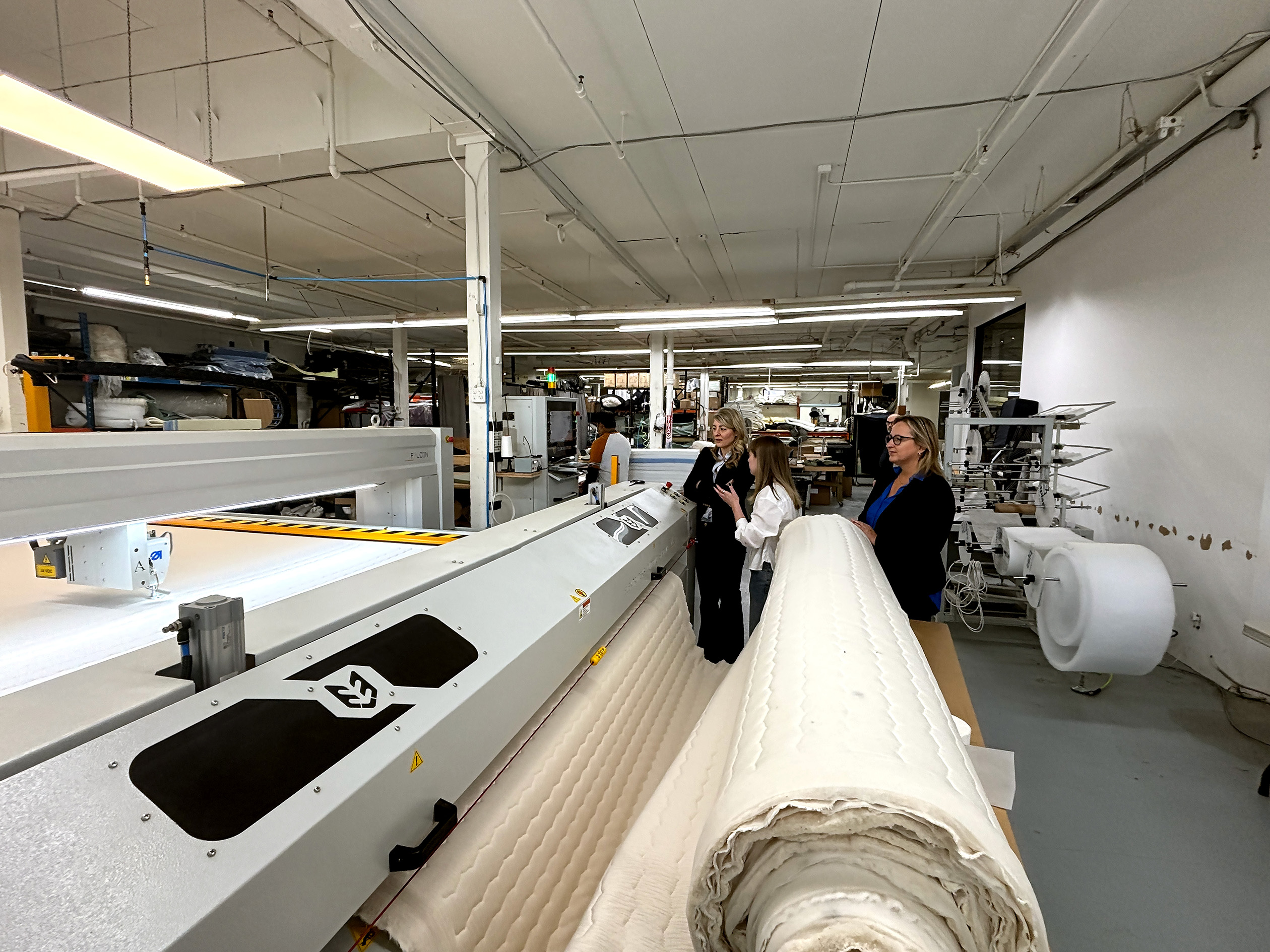
Photo: SDC District Central — Matelas Sélection’s manufacturing facility on de Port-Royal Street West in District Central. Local urban production made possible by the proximity of infrastructure, suppliers, and transportation networks.
The Risks of Inadequate Planning
Urban planning that overlooks logistics challenges exposes an area to systemic risks, such as the gradual relocation of productive activities to outlying areas or even beyond metropolitan regions, with direct consequences for costs, delivery times, and greenhouse gas emissions.
This highlights a paradox: while public policies promote densification, local production and reduced carbon footprints, the logistics infrastructure needed to achieve these objectives remains largely absent from land-use planning decisions.
Carolyn Kelly Dorais, Urban Design and Planning Project Manager at Zaraté + Lavigne Architectes and a member of the SDC District Central’s board of directors, conducted a detailed analysis of various strategic planning proposals, including the City of Montréal’s 2025–2027 Urban Logistics Action Plan.
Across the documents she reviewed, she identified, among other things, a disconnect between the stated objectives and the proposed actions for an industrial district with an extensive productive vocation. “When, on the one hand, we say we want to preserve an area’s industrial heritage and mixed-use character, while on the other hand proposing to drastically restrict an activity essential to maintaining the economic fabric, such as heavy truck traffic, this inevitably raises inconsistencies. For stakeholders to embrace change, they need to understand the rationale behind the actions being taken,” she explains.
Finally, inadequate planning limits the ability of public authorities to intervene effectively. Without suitable land reserves or supportive regulatory frameworks, it becomes difficult to reintroduce logistics functions into areas from which they have been displaced. The city consequently loses flexibility and its ability to adapt to economic change.
Recognizing urban logistics as an essential component of land-use planning lays the groundwork for balanced development capable of addressing the economic, social, and environmental challenges of the 21st century.
Since 2016, the SDC District Central has been working to revitalize a legendary district, raise its profile and propel it to the forefront of Montréal’s economy. It brings together more than 2,100 businesses and manufacturers, generating over 25,000 jobs in the design, urban manufacturing, and technology sectors.
Source: Le Devoir — sponsored content.
This article is translated from an original text written by Manon Limoges and published in Le Devoir.
District Central: Reimagining a Productive Territory on a Human Scale
The Chabanel area has something quite rare in Montréal: large manufacturing buildings with robust structures, extensive surface parking, and good public transit connections, with Chabanel train station and Crémazie and…
Read More
Recap of the 2027 BGA – Highlights and Outlook
On September 23, the SDC held its annual Budget General Assembly (BGA), an important gathering for the business community. It was an opportunity to look back on the work carried…
Read More