
NEWS FROM RIGHT HERE
An Alley Unlike Any Other (And That’s a Good Thing)
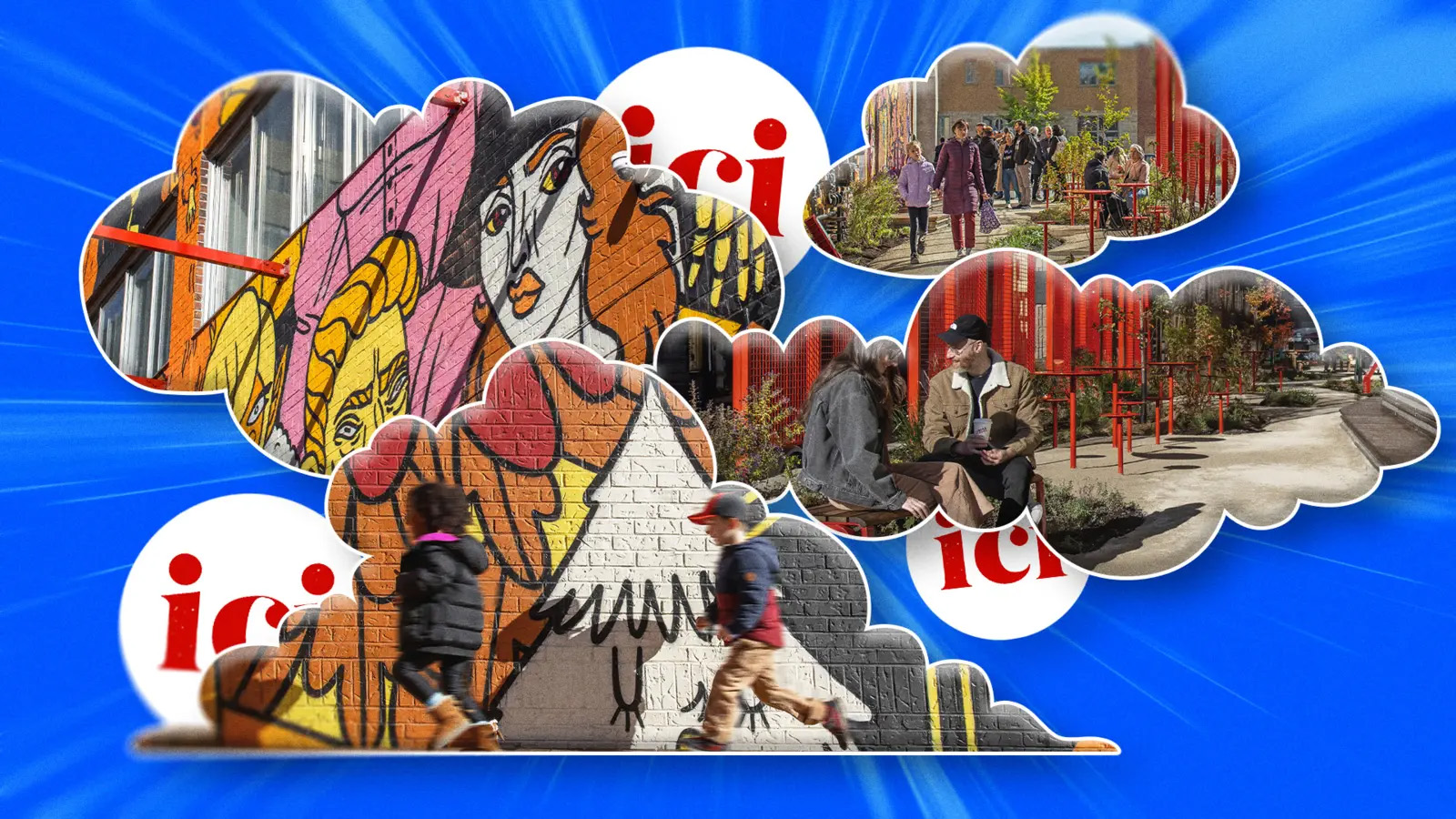
Imagining the Montreal of tomorrow with the Ruelle L’Oasis, in the heart of the District Central.
URBANIA and the SDC District Central are teaming up to prove that a neighborhood with an industrial soul can become greener and more vibrant. Here, bricks stand side-by-side with greenery, murals, and the aroma of freshly ground coffee.
Did you know that Montreal is Canada's clothing capital and ranks third in North America in this industry? This prominence is due in part to the District Central neighborhood, located at the intersection of Highways 15 and 40. And the industrialization that kept the city's economic heart beating for decades has reinvented itself to also create a dynamic and attractive living environment.
In recent years, the Société de développement commercial District Central (SDC District Central) has been aiming for a deep transformation of the territory so that the industrial ecosystem can turn into sustainable living and working spaces. Among its most eloquent initiatives is the magnificent Ruelle L’Oasis, located on Chabanel. Once just a faded, grassy passageway nestled between two imposing buildings, it is now a vibrant green space, designed to offer workers a moment of respite, residents a place of pride, and the City a concrete model for ecological transition.
Walking through it, you can see that the neighborhood is evolving rapidly while gradually regaining its vitality and beauty. Thanks to its Plan d’interventions Signature (Signature Intervention Plan), a world of possibilities is opening up, and the SDC District Central is proving it.
More green, more life, more pride.
The Ruelle L’Oasis is a living ecosystem, designed to breathe new life and beauty into an industrial environment. One could even say that this space has become a true urban design manifesto, thanks to its wide variety of context-appropriate plants—ground cover, perennials, shrubs, and bushes—and a metal trellis designed to support climbing plants, inspired by the textile weaves that once brought fame to the area.
Together, they form a resilient micro-landscape capable of filtering rainwater, regulating temperature, reducing wind gusts, and providing a sustainable green corridor in the heart of one of Montreal's most mineralized, concrete-heavy neighborhoods. What’s more, you can escape the roar of cars and trucks from the surrounding streets to hear birds chirping instead—what more could you ask for?
Designed for workers, businesses, and residents alike, the alley is also a popular spot to relax, take breaks, and meet up. Neighborhood residents needed an attractive and welcoming space, which is why the developers spoke of creating a "lunch paradise."
The space even features a suspended light canopy, ensuring the alley remains attractive long after dusk. So, don't be surprised if you catch me sitting there, writing my next URBANIA article!
Not to mention that urban art is also front and center. Adorning one of the walls is a splendid, vibrant mural by Maxilie Martel-Racicot, aka Monosourcil, a Montreal artist renowned for her whimsical and wacky characters. Titled 333, this artwork is bursting with colorful, half-grotesque, half-tender figures that evoke the unbrided vitality of urban culture, while adding a playful touch to the starkness of the industrial building—go check it out!
Imagine if Montreal’s 4,300 or so alleys were all as pleasant and charming as the Ruelle L’Oasis. Though often overlooked and underestimated, Montreal's alleys are actually an integral part of the city’s charming personality. City dwellers like me all have fond memories tied to these speed-bump-dotted passageways. For my part, I’ll never forget the endless street hockey games of my childhood, or the dread we felt that our orange ball would disappear whenever it rolled near the gutter! Whether we gather in the alleys for drinks with friends, use them as playgrounds, or simply stroll through them to explore, they are hidden treasures that deserve a lot of love.
Reconciling Industrial Memory with a Sustainable Future
The profound transformation of the Ruelle L’Oasis does not, however, deny the neighborhood's industrial past. The textile industry arrived in the District Central during the 1950s, alongside market gardeners who set up shop in what would eventually become the Marché Central. Over time, due to free trade, competition hit the neighborhood hard. And therein lies the great challenge for the SDC District Central: reviving this heritage without erasing it, and turning this industrial legacy into a driver for sustainable innovation.
Thus, by acting as a catalyst and a voice for the local business community, the SDC District Central reconciles these two realities: that of a rich manufacturing history that shaped Montreal, and that of a future where industrial neighborhoods also become spaces for living, connecting, and taking pride. Today, behind the facades of the large brick and concrete buildings, a completely different neighborhood—once dubbed "The Fashion City"—is being reimagined. It is an eco-responsible destination that, thanks to more than 25,000 workers, stands as the city's fourth-largest employment hub, where innovation and sustainability pick up the thread of a history woven by the textile industry.
***
To find our more about this business community, visit the website District Central.
Source: Urbania – Partner Content
This article is an adaptation of an original piece written by Guillaume Whalen and published in Urbania.
Read the original article: URBANIA - Une ruelle pas comme les autres (et c'est tant mieux)
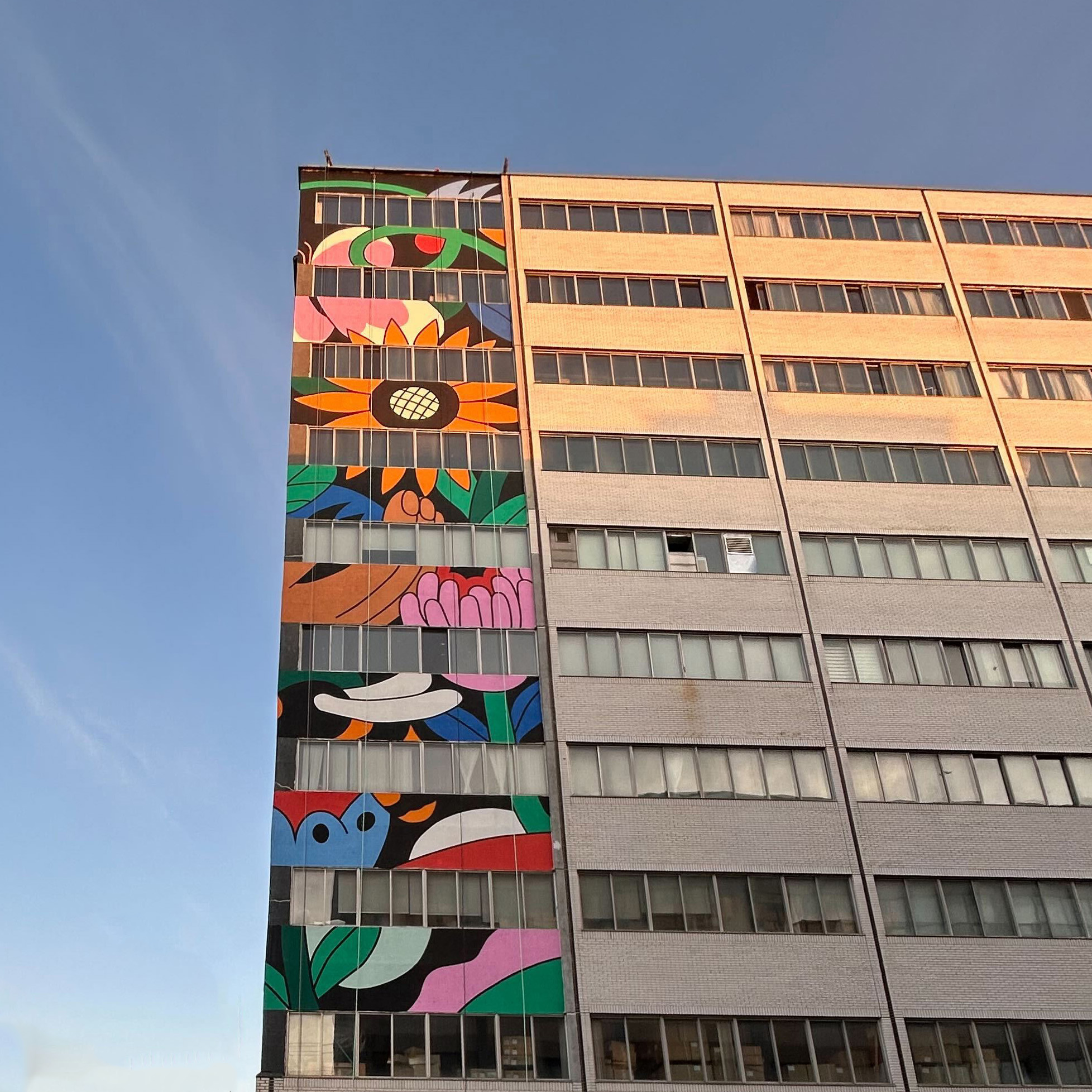
A New Sculptural Mural in District Central
A unique new mural with a sculptural component is well worth a visit in District Central. The artwork, titled Ligne...
Lire la suite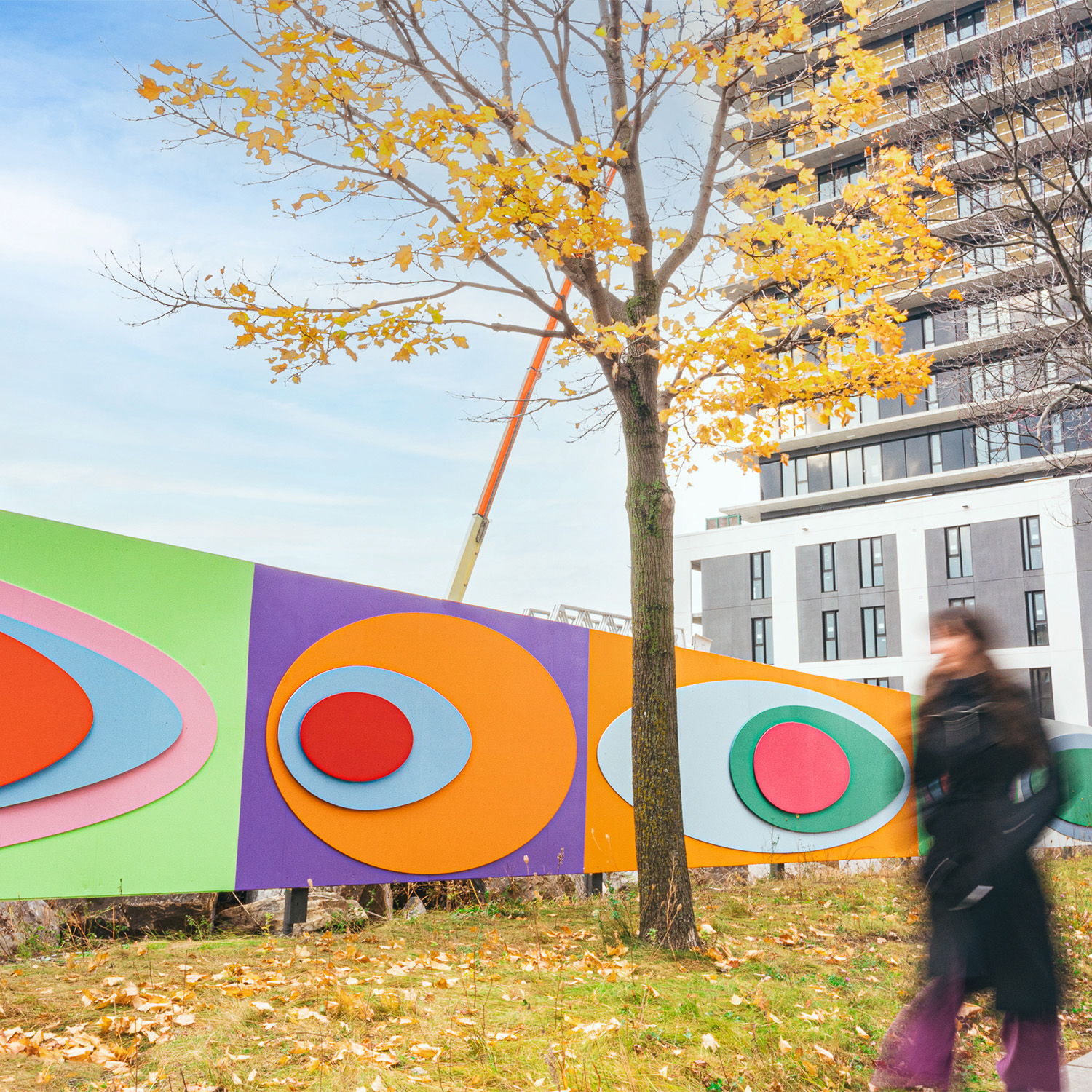
A 120-foot work of art by Marlon Kroll
What if a construction site became an opportunity for urban renewal? That's the aim of the ANIMA project, with a...
Lire la suite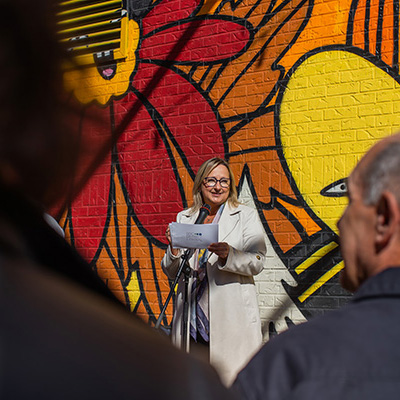
From the Shadows to Influence: The Rise of District Central in 10 Years
PHOTO BY ÉMILIE DELORME, FOR SDC DISTRICT CENTRAL Inauguration of the Ruelle L'Oasis At the heart of Ahuntsic-Cartierville, the Société...
Lire la suite