
NEWS FROM RIGHT HERE
May 21, 2026
Urban Logistics: A Key Driver of Competitiveness
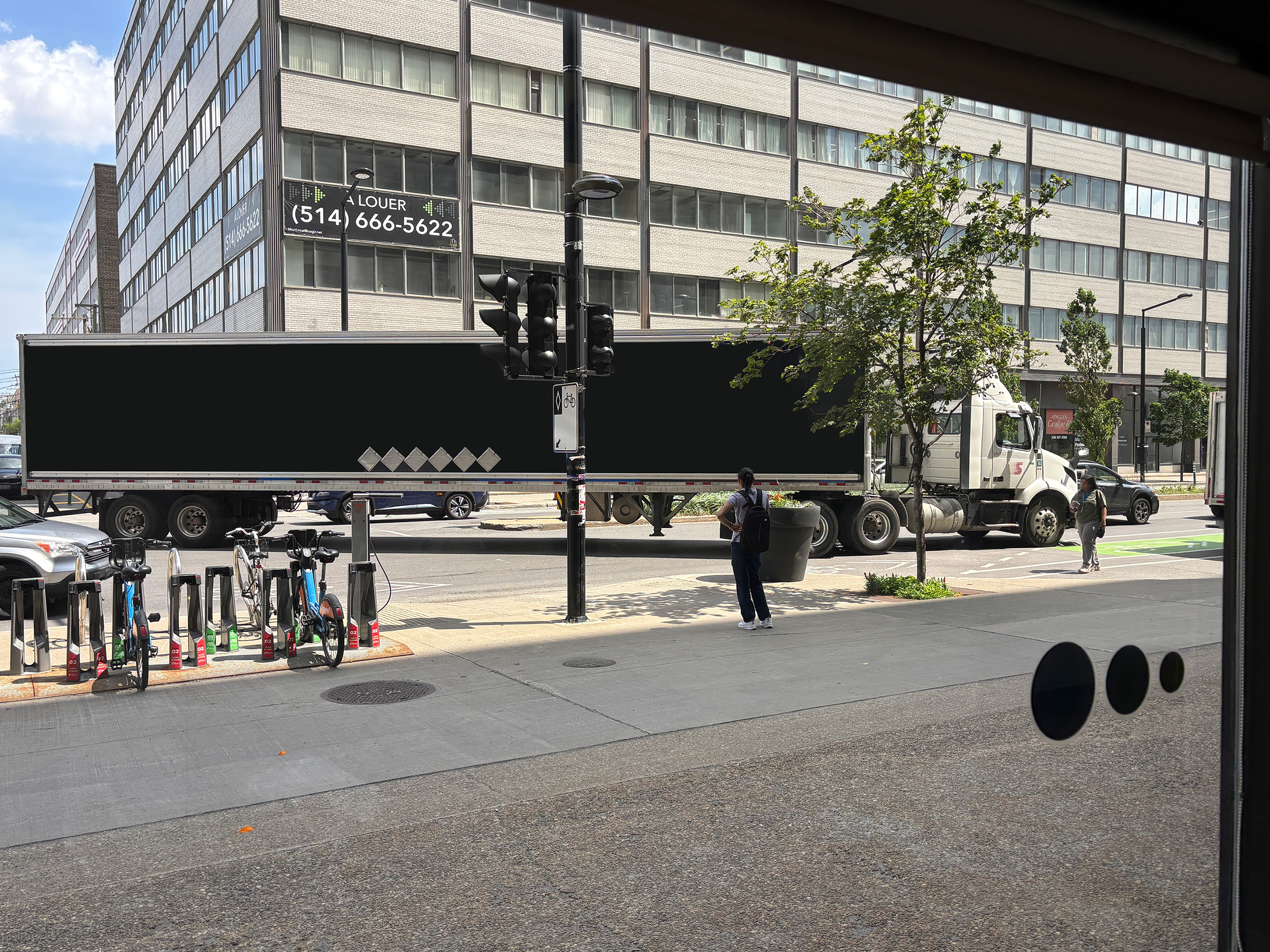
Transport truck travelling through District Central at the corner of Park Avenue and Chabanel Street West.
Moving a product from point A to point B should be straightforward. Yet in an urban environment, that journey can quickly become complicated. Site access, traffic and delivery logistics all have a direct impact on operational performance. In established industrial districts that have been active for decades, these challenges highlight the importance of better integrating logistics considerations into urban planning and decisions about how industrial sites evolve.
Real-World Challenges on the Ground
The situation in District Central, Montréal, illustrates these challenges, as recent changes to public spaces have forced several industrial businesses to adapt their operations. Located in an employment hub at the junction of Highways 40 and 15, Attraction manufactures approximately 15,000 garments each week. The company receives raw materials, transforms them into finished products and ships its goods across Canada. However, recent changes to the street layout have made accessing its facility more complicated.
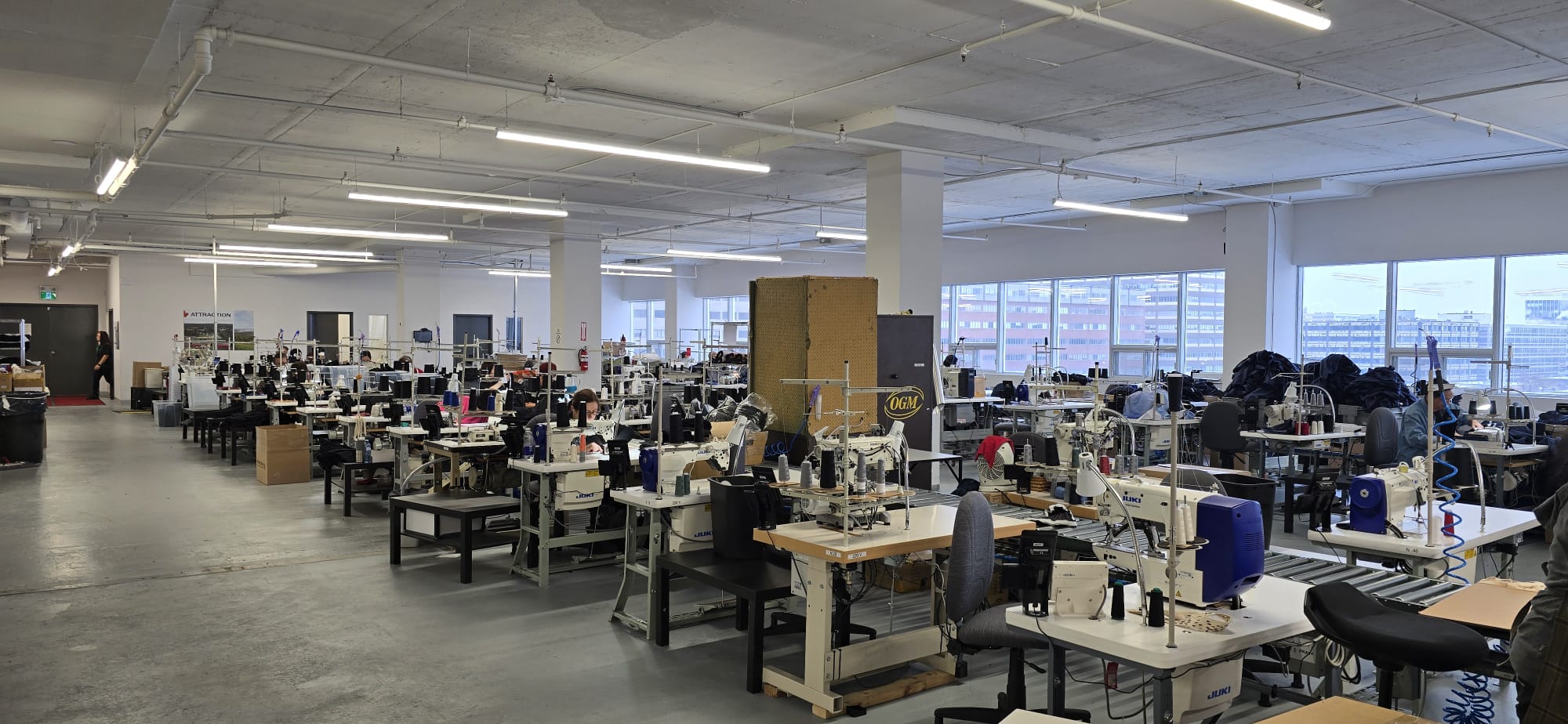
Inside Attraction’s garment manufacturing workshop at 9200 Park Avenue — local production at the heart of District Central.
“The streets are narrow, and large transport trucks can’t always get through,” explains Philippe Gagnon, Vice President of Canadian Operations, pointing to the additional constraints created by recent street redesigns. As a result, Attraction has had to adopt a transshipment system: a smaller truck collects the goods and transfers them to a distribution centre before they are shipped to their final destination.
This additional step costs the company approximately $15,000 a year and adds a full day to delivery times. “It means extra costs, added complexity and lost time, at a time when we have business opportunities that depend on reliable logistics,” says Gagnon.
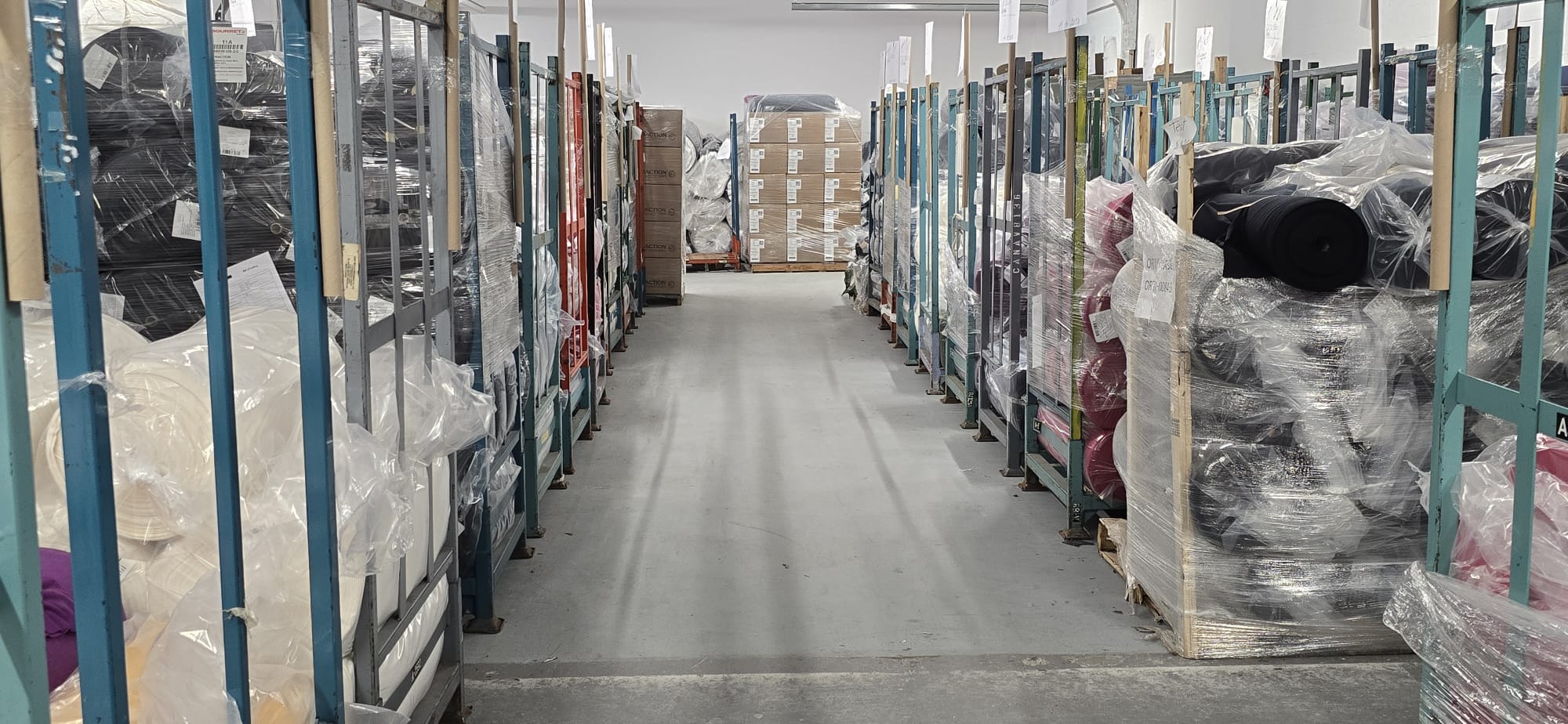
Textile material storage at Attraction, 9200 Park Avenue — a glimpse into logistics operations at the heart of District Central.
An Overlooked Strategic Priority
At the metropolitan level, these challenges are part of a broader picture. Montréal is a major hub connected to maritime, rail, air and road networks. Yet supply chain planning is still too often overlooked in urban planning and development decisions.
“Transportation and logistics are key drivers of business competitiveness,” says Louis-Philippe Allard, Executive Director of CargoM.
When logistics is not properly integrated into planning, the result is higher costs, delays and lost efficiency. “Logistics is too often overlooked in development projects, even though there is a strong case for considering it from the outset,” Allard adds.
The main challenge lies in siloed planning. Urban development projects account for residential and commercial needs, as well as mobility, but give little consideration to the movement of goods. This lack of coordination leads to inefficiencies, higher costs and disruptions to the smooth flow of goods.
When Better Planning Becomes a Competitive Advantage
Conversely, integrating logistics planning from the earliest stages of a project can deliver significant benefits. Better coordination of goods movement helps reduce distances, optimize delivery times and make deliveries more predictable.
This translates into greater flexibility and a stronger ability to meet customer expectations, at a time when delivery windows are becoming increasingly tight.
This optimization also delivers environmental benefits by reducing travel distances and emissions.
District Central: Finding the Right Balance
District Central is a good example of this dynamic. Recognized as a metropolitan innovation zone, the neighbourhood benefits from a dense industrial ecosystem, short supply chains and a nearby workforce.
These strengths support agility and reinforce local economic ties. However, the coexistence of industrial activities, residential areas and new forms of mobility also presents challenges.
“We need to find ways to better align business needs with the realities of the territory,” says Philippe Gagnon, who also serves as Vice President of the Board of Directors of SDC District Central.
In this context, the movement of goods must become a more systematic part of urban planning discussions to help strike the right balance between competing needs.
A Key to Competitiveness
Site accessibility, smooth deliveries and the efficient movement of goods are becoming decisive factors in business location and development decisions. These factors have a direct impact on performance.
Well-organized logistics are no longer simply a support function. They are a genuine driver of competitiveness for businesses and for the territories seeking to attract and retain them. With this in mind, District Central is positioning itself as a real-world testing ground where smart logistics, innovation and economic development move forward together.
This article is a translation of an original piece written by Les Affaires Contenus partenaires and published in Les Affaires.
Read the original article here >>

District Central: Reimagining a Productive Territory on a Human Scale
The Chabanel area has something quite rare in Montréal: large manufacturing buildings with robust structures, extensive surface parking, and good public transit connections, with Chabanel train station and Crémazie and…
Read More
Recap of the 2027 BGA – Highlights and Outlook
On September 23, the SDC held its annual Budget General Assembly (BGA), an important gathering for the business community. It was an opportunity to look back on the work carried…
Read More