
NEWS FROM RIGHT HERE
A District Dedicated to Quebec’s Economic Self-Reliance
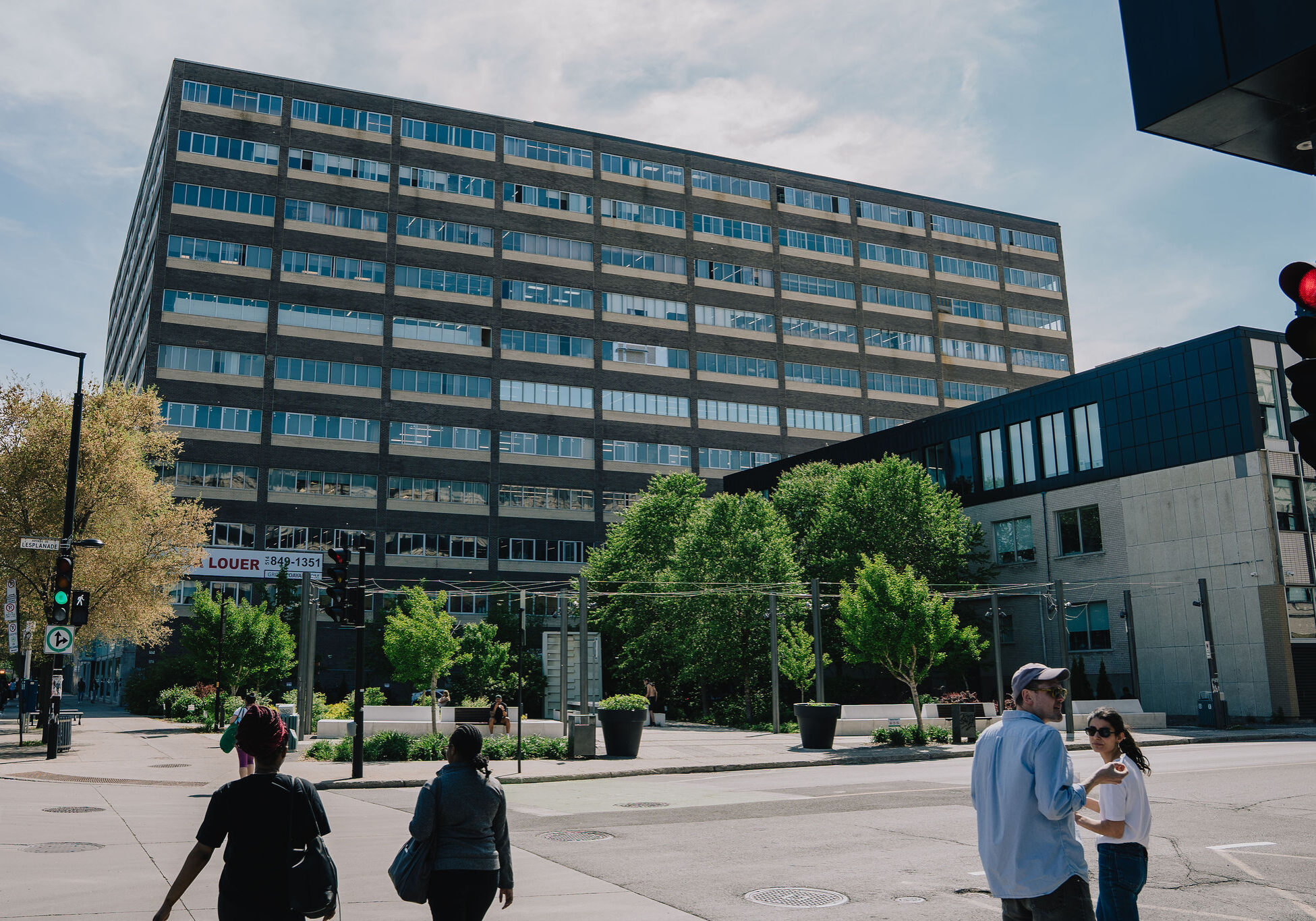
District Central is 25 million square feet. Photo credit: Branden Desormeau
Pandemic, inflation, trade wars with the United States... every time a crisis breeds economic uncertainty, the importance of local production returns to the forefront. District Central, a thriving industrial hub, holds all the cards to support Quebec’s manufacturing sovereignty. However, for this to happen, the ecosystem must recognize the district’s many assets for what they are worth and offer its full, unwavering support.
"We all agree that reclaiming our industrial capacity is crucial to facing current and future crises. That is why it is important to remember that Montreal’s District Central already holds the keys to ensuring the province’s autonomy," says Hélène Veilleux, Executive Director of the SDC District Central. "We are talking about 25 million square feet of space, featuring large loading docks, solid buildings, affordable rents, and available vacancies. All the ingredients are there. And what makes the difference is the proximity between players—the suppliers, the creators, and the logistics experts. This living ecosystem is our greatest asset for accelerating local production."
Furthermore, because the infrastructure is already in place, utilizing District Central to its maximum potential allows entrepreneurs and investors to reduce their environmental footprint. "Rethinking the city through the lens of ecological transition also means prioritizing local production, which is a major win for the planet," Veilleux insists.
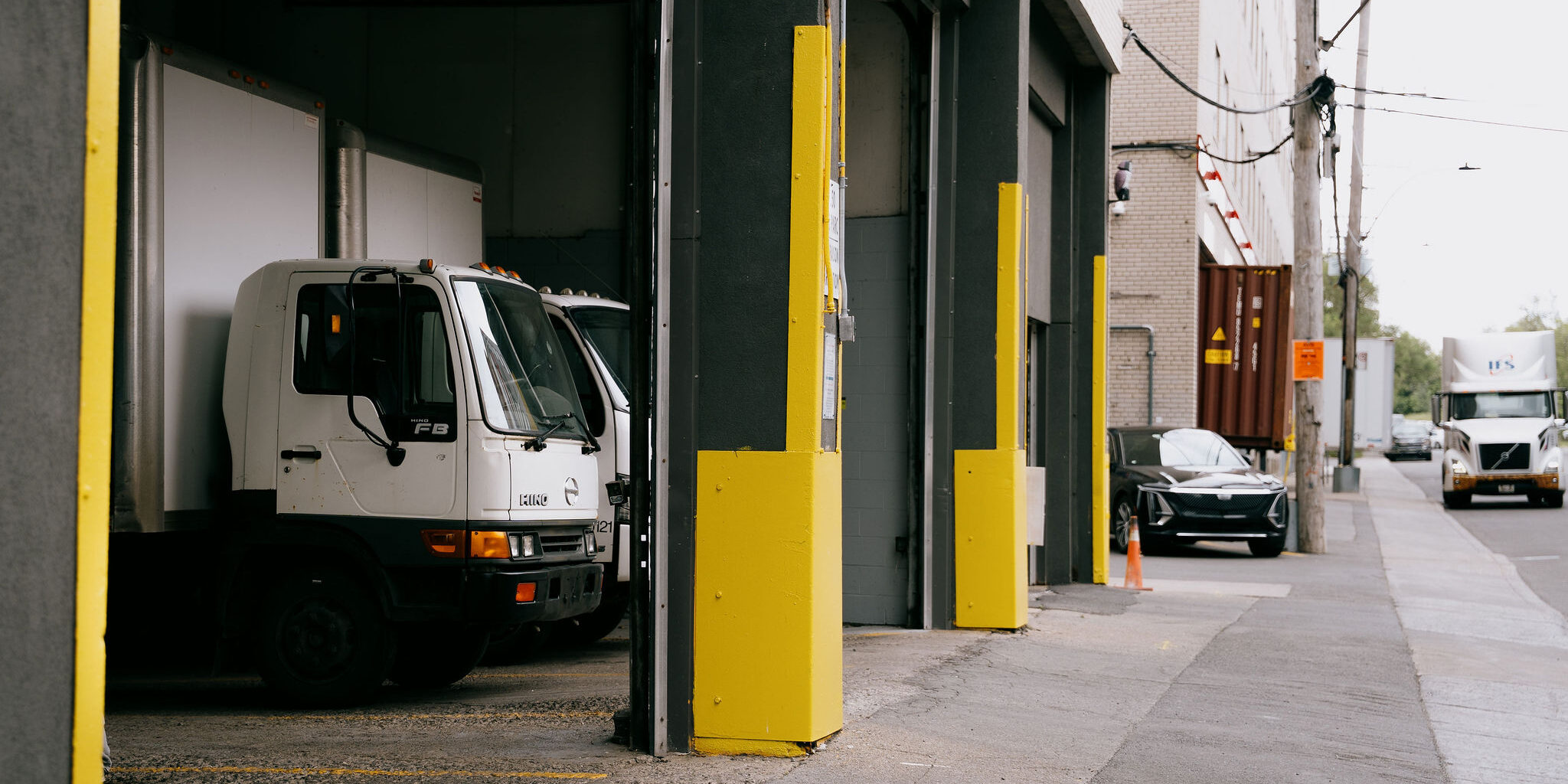
District Central’s abundant loading docks make it an ideal hub for urban manufacturing. Photo credit: Branden Desormeau
Iconic Businesses
The first industries in District Central emerged over a century ago. In its early days, the area was a hub for manufacturing streetcars, artillery shells, and munitions. By the 1950s and 60s, the tide shifted: the neighborhood began attracting market gardeners before evolving into Montreal’s fashion epicenter for the following two decades.
Today, 2,188 companies call this territory home, benefiting from a prime location at the junction of Highways 15 and 40. This total includes 1,185 industrial firms, of which 550 are urban manufacturers and over 600 are textile businesses. "Iconic brands like Reitmans and Cansew recently celebrated their centenaries," notes Hélène Veilleux. "Ciot has marked 75 years; Terra Café, 45 years; Maison Marie Saint Pierre, 35 years; and Groupe Trium, 25 years."
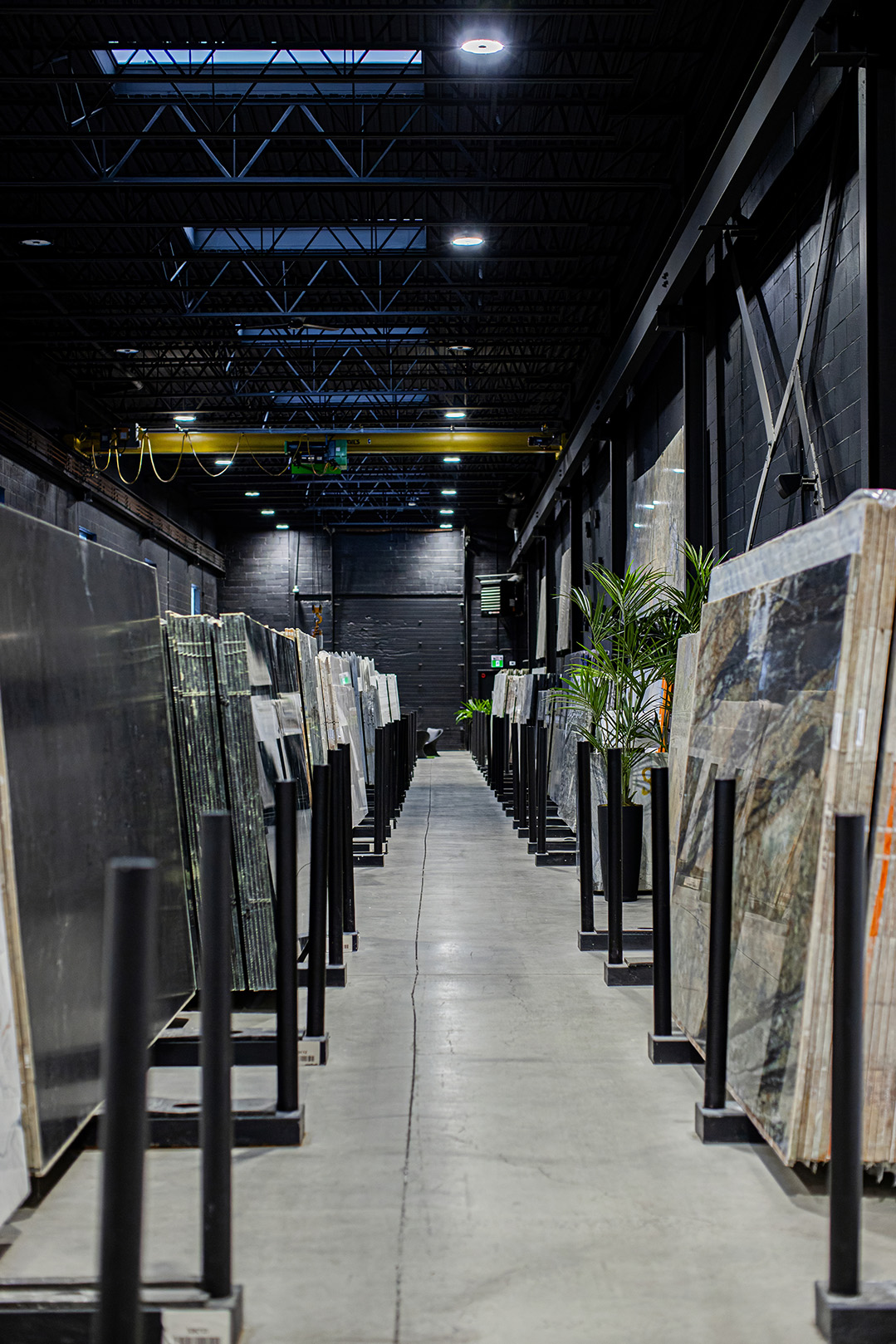
An extensive selection of ceramic, marble, and porcelain tiles at Ciot, located at 9151 Saint-Laurent Boulevard in the Saint-Laurent sector of District Central. Photo credit: Émilie Delorme
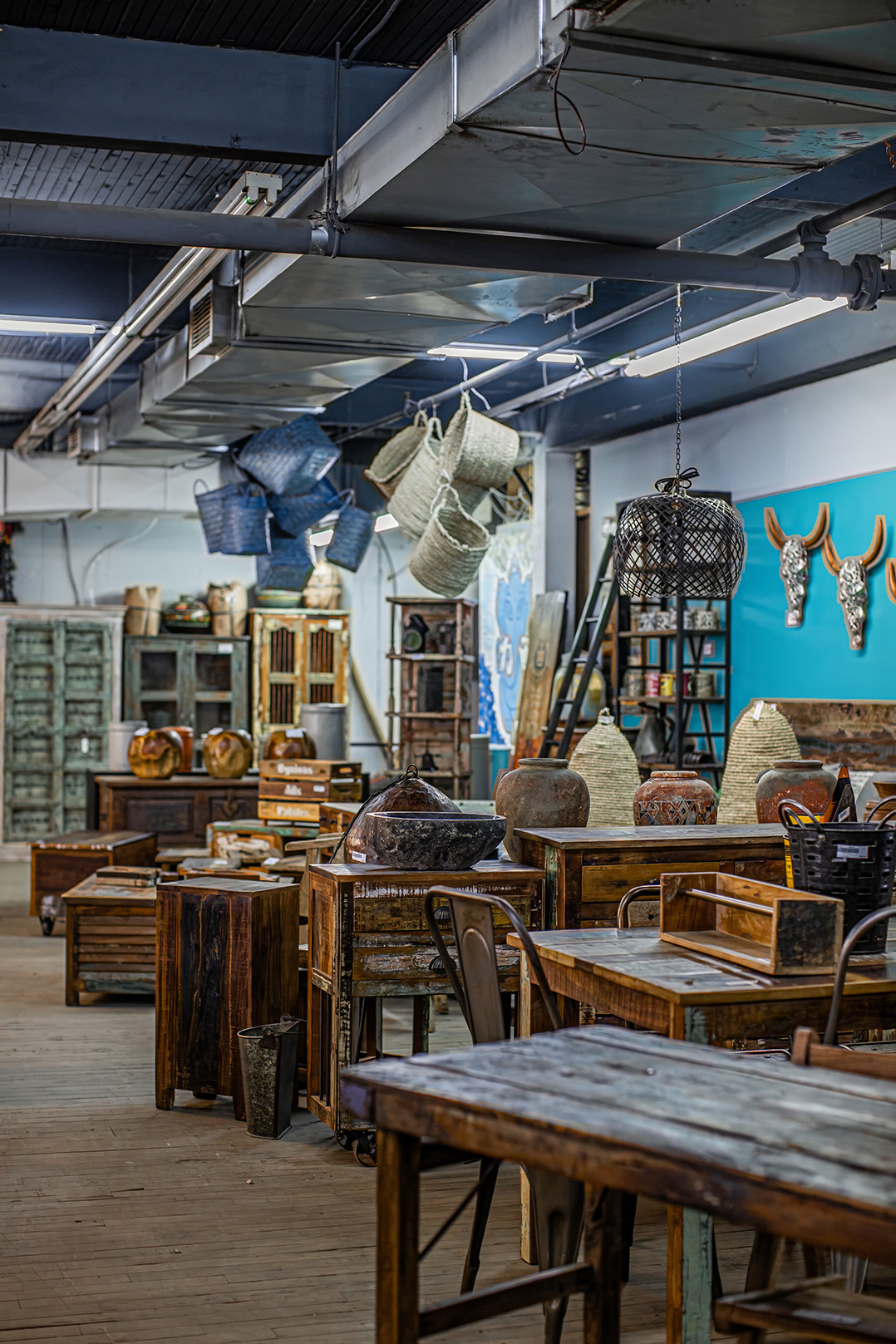
The Exotik Mobilier showroom at 8785 du Parc Avenue in the Chabanel sector of District Central. Photo credit: Émilie Delorme
A Wave of Innovation
Despite its deep manufacturing roots, District Central stands as a prime example of innovation. "We can take pride in being a model for a contemporary, forward-thinking productive district," says the Executive Director. "For instance, the European market is very impressed by our principle of vertical development—industrial buildings designed across multiple floors. They are inspired by this approach, which requires a much smaller footprint. This vertical model can only succeed through a network of interconnected businesses ready to collaborate and share their expertise."
Designated a "Metropolitan Innovation Zone" in 2021, the district is also seeing a rise in industrial merchants. These manufacturers feature on-site boutique storefronts where both corporate clients and individuals can purchase goods manufactured right inside the same building.
A Look Toward the Future
With its well-designed built environment and unique manufacturing expertise, District Central is fully equipped to meet the major challenges of our time. Deeply committed to the ecological transition, it is adapting to global supply chain pressures and reasserting the importance of "making it here." This territory embodies the necessity of preserving urban production spaces while championing a circular, localized economy. In short, these invaluable assets confirm its essential role in the province’s ongoing evolution.
"At the SDC District Central, we are convinced that the future is built through the collaboration of everyone involved—businesses, citizens, and elected officials alike. By working together, we can transform the neighborhood into an exemplary Metropolitan Innovation Zone, where local production and community life mutually enrich one another," concludes Hélène Veilleux.
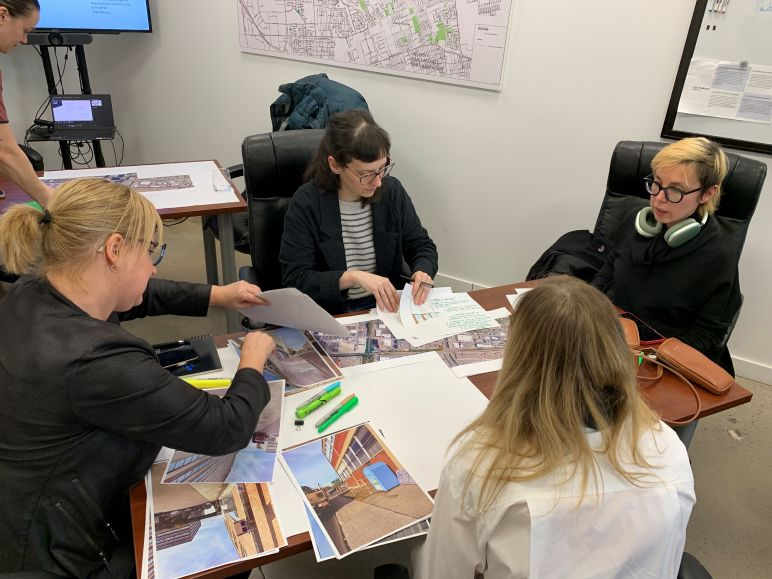
SDC District Central working committee in action


Recap of the 2026 BGA – Highlights and Outlook
On September 29, the SDC District Central held its 2026 Budget General Assembly (BGA), a key moment for our business...
Lire la suite
La Prairie Louvain: sunflowers for creating ties
Reinventing an entire sector of the city is no small task, but it's also an inspiring challenge! Active since...
Lire la suite
The SDC is Hiring : Administrative and Member Services Coordinator
SUMMARY Job type: Full-time - Permanent Main job field : Administration Secondary field: Member Services Relevant years of experience: 3-5 years...
Lire la suite