
NEWS FROM RIGHT HERE
February 3, 2026
The Challenges and Requirements of an Ambitious Transformation Process
In recent years, District Central has successfully attracted a wide range of businesses. Its many strengths even earned it the designation of "Metropolitan Innovation Zone" in 2021. Driven by the rollout of a Signature Urban Planning Intervention Plan, the district has also enjoyed unprecedented public visibility. However, certain recent interventions—carried out without genuine consultation with local stakeholders—came as a rude awakening. These events serve as a stark reminder of the complexity inherent in such an ambitious transformation process.
Martine Peyton, urban planner and president of ELEMENTS Planification urbaine, is categorical: maintaining a healthy ecosystem like District Central—where urban manufacturing, retail, and residential pockets coexist—is a delicate balancing act. "To succeed," she says, "cohabitation requires a deep understanding of everyone's needs and realities. Urban planning projects are no exception; ignoring this rule carries significant consequences."
From rising operational and production costs to a decreased sense of general safety and accessibility hurdles, the rollout of a bike path in a high-density industrial sector demonstrated the immediate ripple effects of poorly integrated projects.
For Alexandre Watson, Head of Land Entitlement Services at Landerz, the long-term impact on the area’s attractiveness could be even more severe. "When a company chooses a location, they aren’t just choosing a building; they are choosing a specific socioeconomic fabric. When that environment shifts, it can lead them to second-guess their decision or even leave."
"Where there are departures, there are vacancies and a gradual devaluation of property," Watson adds. "It’s a dangerous spiral for any real estate owner. The negative impact on land value doesn't happen overnight, but without intervention, it becomes highly likely over a 5-to-10-year horizon. And it isn’t limited to commercial spaces. Fewer businesses mean fewer workers. Fewer workers mean fewer shops—and eventually, less housing."
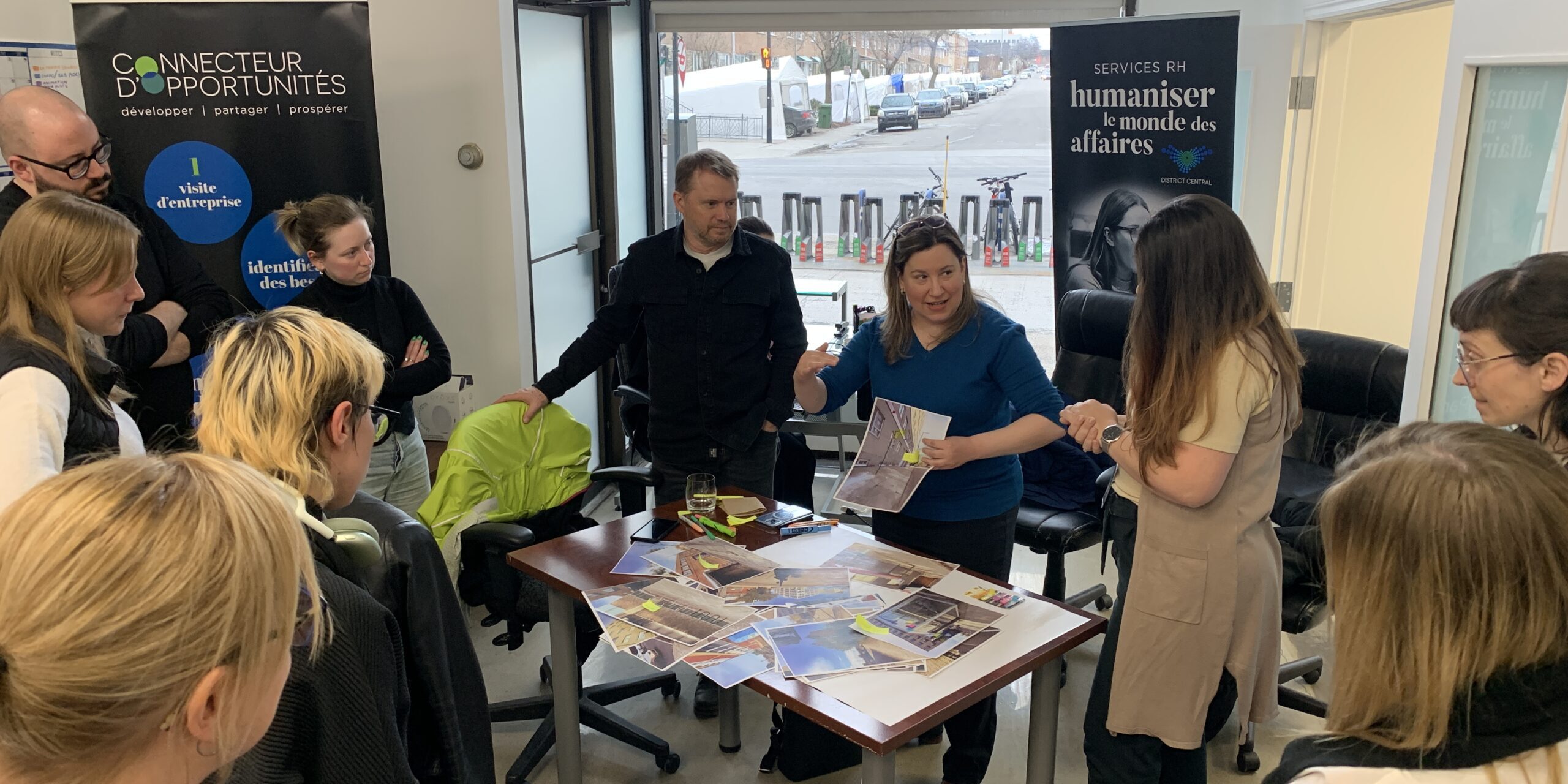
The SDC District Central Mobility Committee in session, reconciling economic development with sustainable mobility.
The SDC District Central remains convinced that anything is still possible. "So far, we have successfully mobilized the community and found common ground that brings all stakeholders together," says Hélène Veilleux, Executive Director of the SDC District Central. "People believe in this territory’s potential, and the trust we’ve built ensures that our ability to unite efforts remains fully intact. That is more than enough to maintain our momentum."
Martine Peyton shares this perspective. "District Central," she notes, "benefits from a significant advantage compared to other planned industrial hubs. The businesses located here—including urban manufacturers—do not see their economic activities as being at odds with sustainable development. Instead, they believe this mobilization allows them to play an active role in every factor shaping their environment. This is a lever we must lean on more than ever to ensure the long-term success of urban planning solutions and the responsible investment of public infrastructure funds."
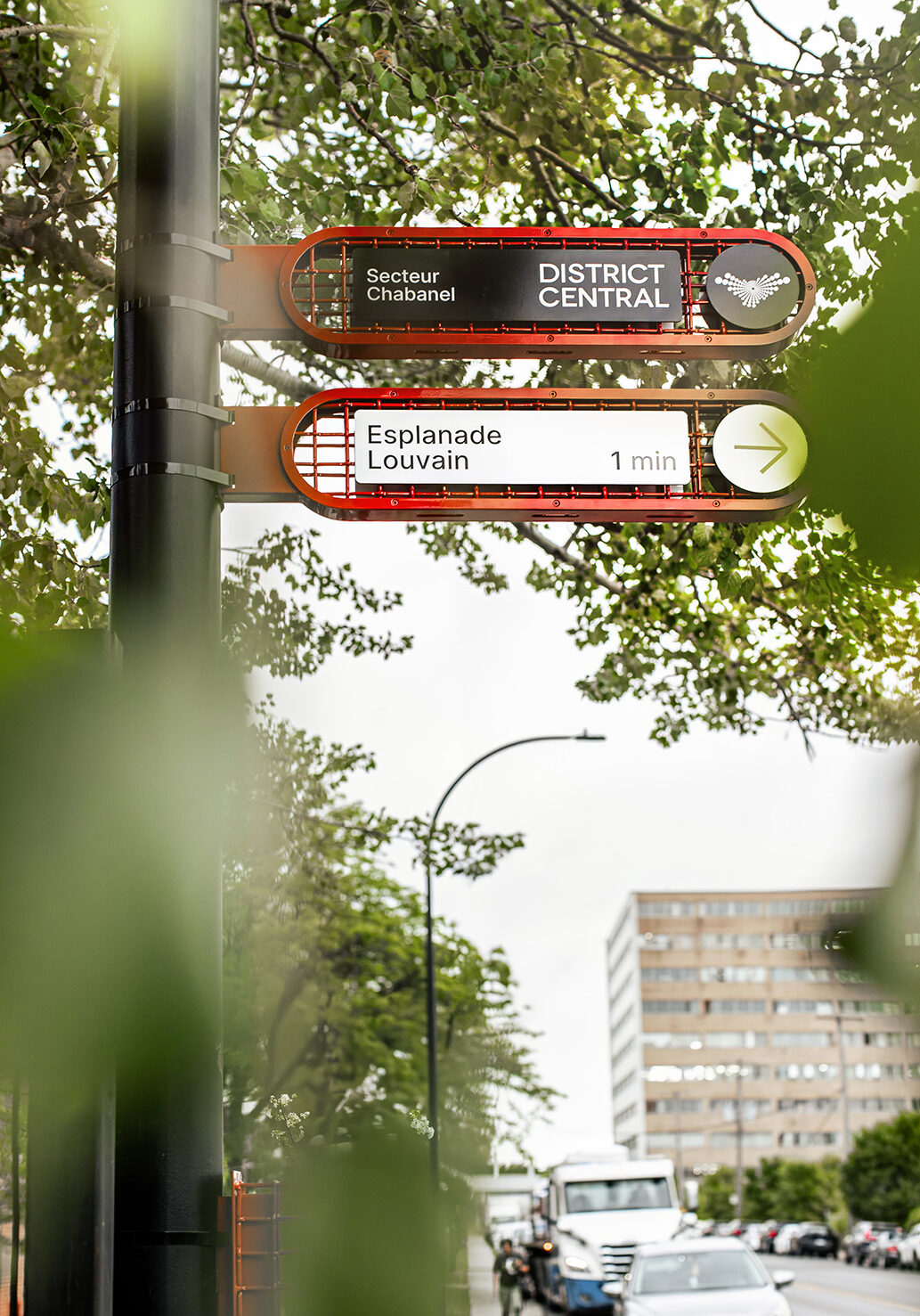
The reason this urban planner insists so much on community engagement is that, in her view, it is essential for the ongoing territorial revitalization—as is the alignment between words and actions.
"The efforts to position District Central have yielded positive results. The various levels of government have not only accepted the ongoing transformation; they have supported it financially," Peyton explains. "In this context, it is vital to consider the built environment and the socioeconomic landscape. If a territorial planning adjustment becomes necessary, we must recognize it and return to the drawing board quickly. We must rely on genuine stakeholder consultation, open dialogue, and a search for solutions that are consistent with both previous investments and the reality on the ground."
For Hélène Veilleux, the stakes extend far beyond the neighborhood. "With the tariffs imposed by the United States, the Quebec and Canadian economies are on shaky ground. Focusing on local production is one way to address this. Doing so in an urban setting, close to where people live, is a win for sustainable development. Coexistence between economic development and active mobility is absolutely possible—others have done it before us. I am convinced that we will innovate and become a global reference point."
Reinventing Montreal: Four Finalist Teams Unveiled for 150 Louvain Ouest, an Economic Lever for District Central
Update – April 3, 2026 The City of Montreal has announced the four finalist teams for the Reinventing Montreal competition for the 150 Louvain West site. Several of the…
Read More
A look back at the 2026 Annual General Meeting
On March 25, the Annual General Meeting (AGM) of District Central was a highlight of the area’s community life. The event provided an opportunity to present the 2025 achievement report,…
Read More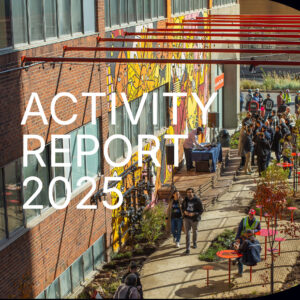
2025 Activity Report – Highlights
MESSAGE FROM THE CHAIR OF THE BOARD AND THE EXECUTIVE DIRECTOR 2025 was a year of courage and cohesion for the District Central. Driven by a major realignment and a…
Read More