
NEWS FROM RIGHT HERE
December 5, 2025
Redesigning the city: the challenge facing District Central
Business parks, tomorrow. That was the theme that brought together economic stakeholders from the Brittany region on December 2. On this occasion, Hélène Veilleux, Executive Director of the SDC District Central in Montréal, shared the vision of a manufacturing district transforming into an urban laboratory where density and mixed uses become key drivers for building a sustainable city. An ambition that opens up new possibilities… but also requires boldness and foresight.
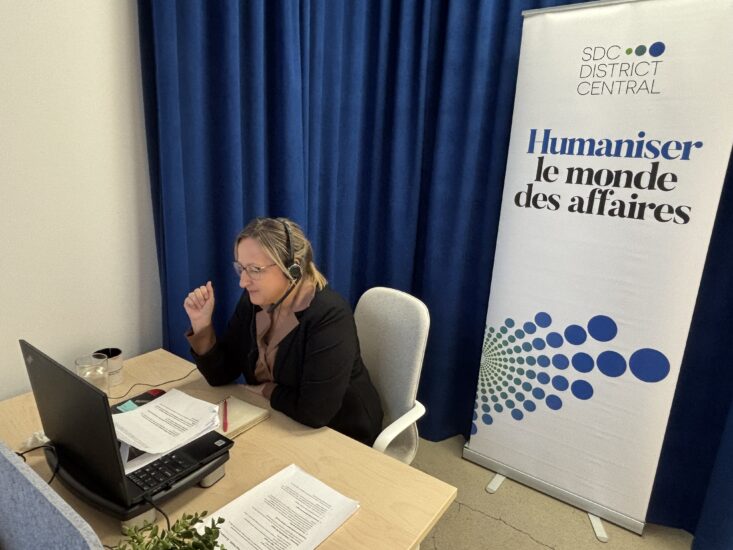
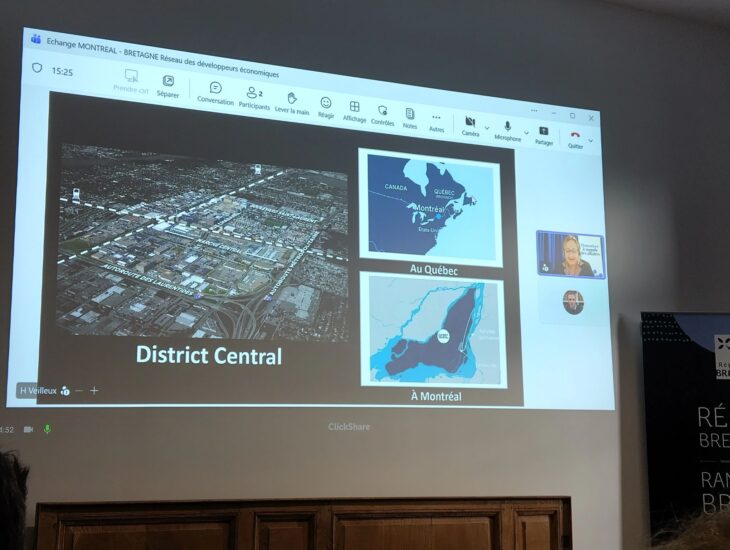
Hélène Veilleux during her online presentation to the economic stakeholders of the Brittany region.
An industrial territory reinventing itself
In the north-central area of Montréal, the District Central still bears the marks of its industrial past: two railway lines running through it and two highways framing it. These infrastructures, long seen as sources of isolation, are also historical assets for logistics. Here, everything was designed for production: 3 km², 25 million square feet of solid industrial buildings, and 360 private property owners. A dense, affordable territory with unique manufacturing expertise. And in the Chabanel sector, 15-storey buildings serve as a reminder that vertical density is not a utopia, but a reality waiting to be leveraged.
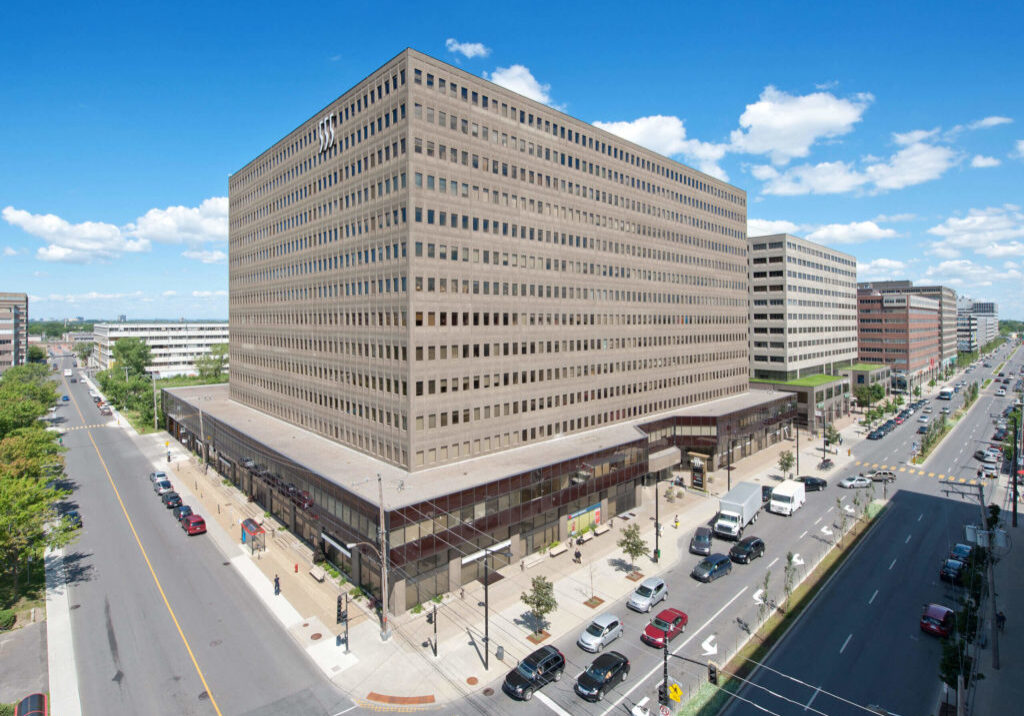
Buildings on Chabanel West
Transforming without erasing: the challenge of mixed use
How can a district evolve without losing its essence? That question captures the heart of the issue. In the Sauvé sector of the District, one-storey buildings house manufacturing workshops, offices, and shops. These building types offer a rare opportunity to increase density and diversify uses—particularly through vertical extensions—while preserving the neighborhood’s identity. The Battat Art Center, now under construction, illustrates this approach: a former masonry workshop transformed into a creative arts hub, expanded from two to four storeys, and designed according to sustainable and carbon-neutral architectural principles. Just a few streets away, an alleyway set to be redesigned will become a shared public space—a symbol of a transformation that values conviviality as much as efficiency.
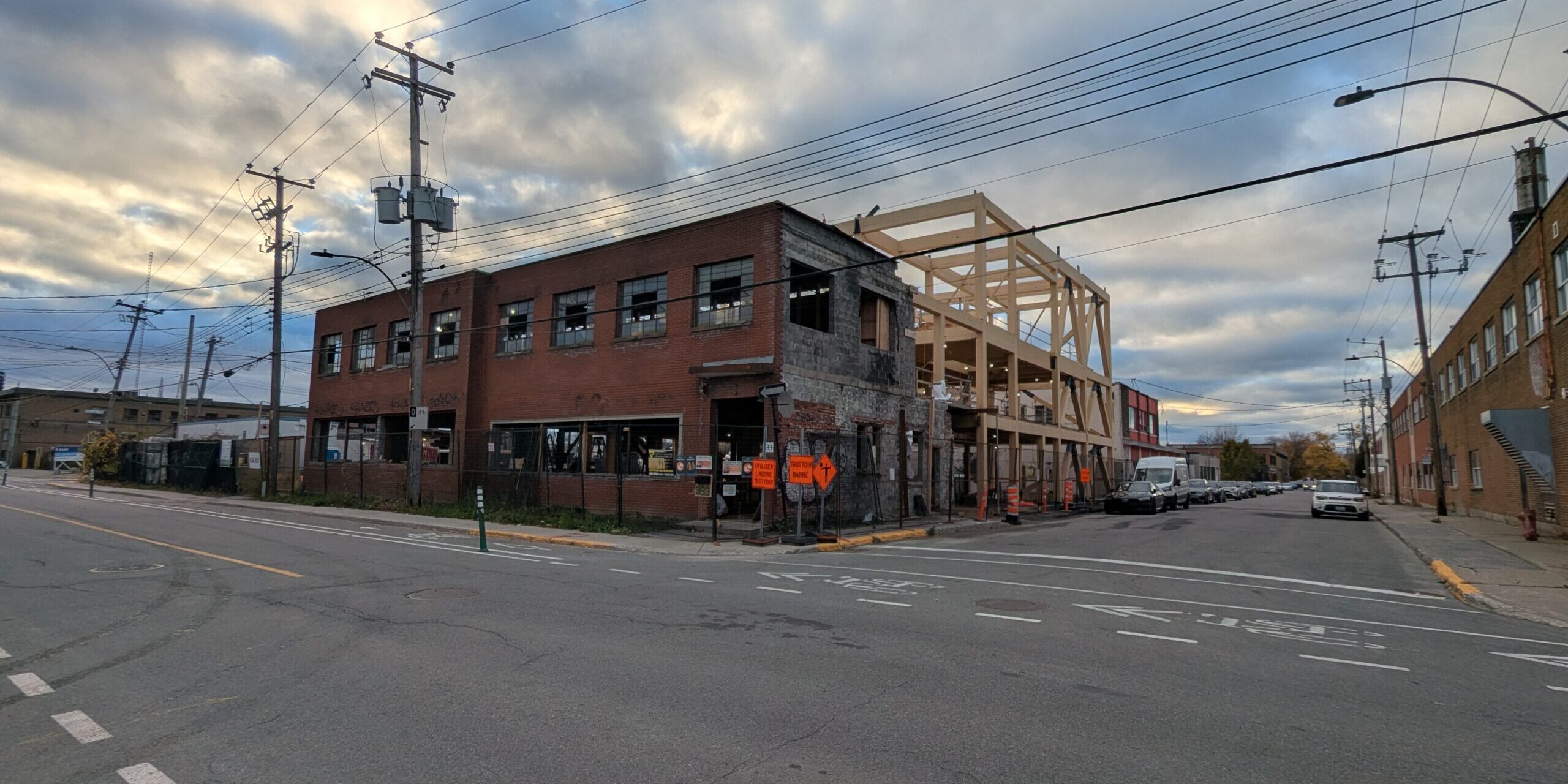
The Centre d’art Battat in construction at 333 Port-Royal W.
Short supply chains: the district’s DNA
District Central is more than a testing ground—it's an ecosystem in motion. The urban agriculture hub is one example. Among the flagship projects: La Centrale agricole, the largest urban agriculture hub in Québec, brings together more than 20 companies in a former industrial building. Les Fermes Lufa, global pioneers, launched the first commercial rooftop greenhouse here in 2010. Ferme GUSH grows pesticide-free strawberries using vertical farming. Tricycle, Tulsi Farm, and Opercule focus on insect farming, microgreens, and aquaponics to reduce environmental impact. These initiatives show that intensification is not just about physical density—it’s about generating synergies between production, commerce, and innovation.
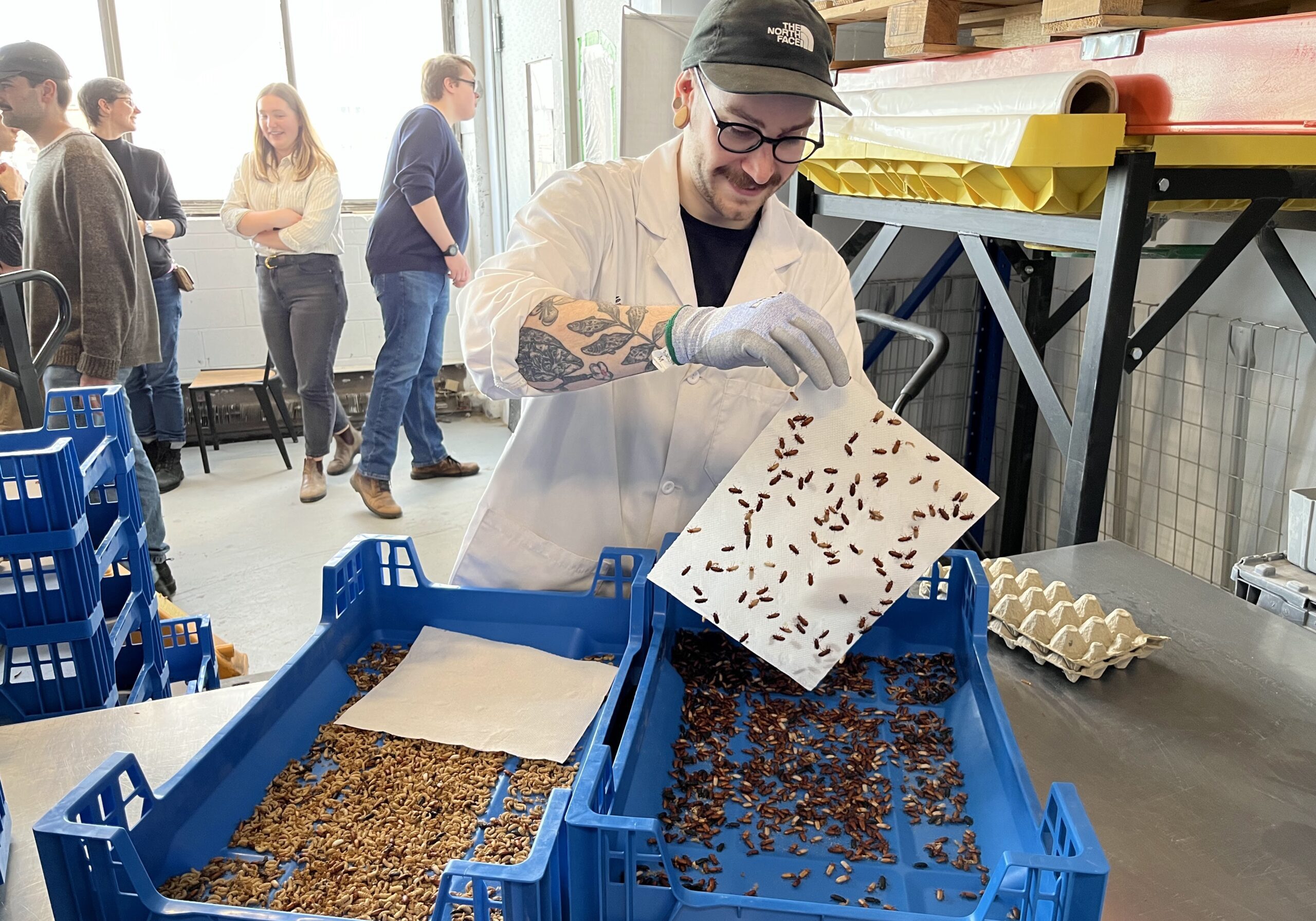
Tricycle – Mealworm farming
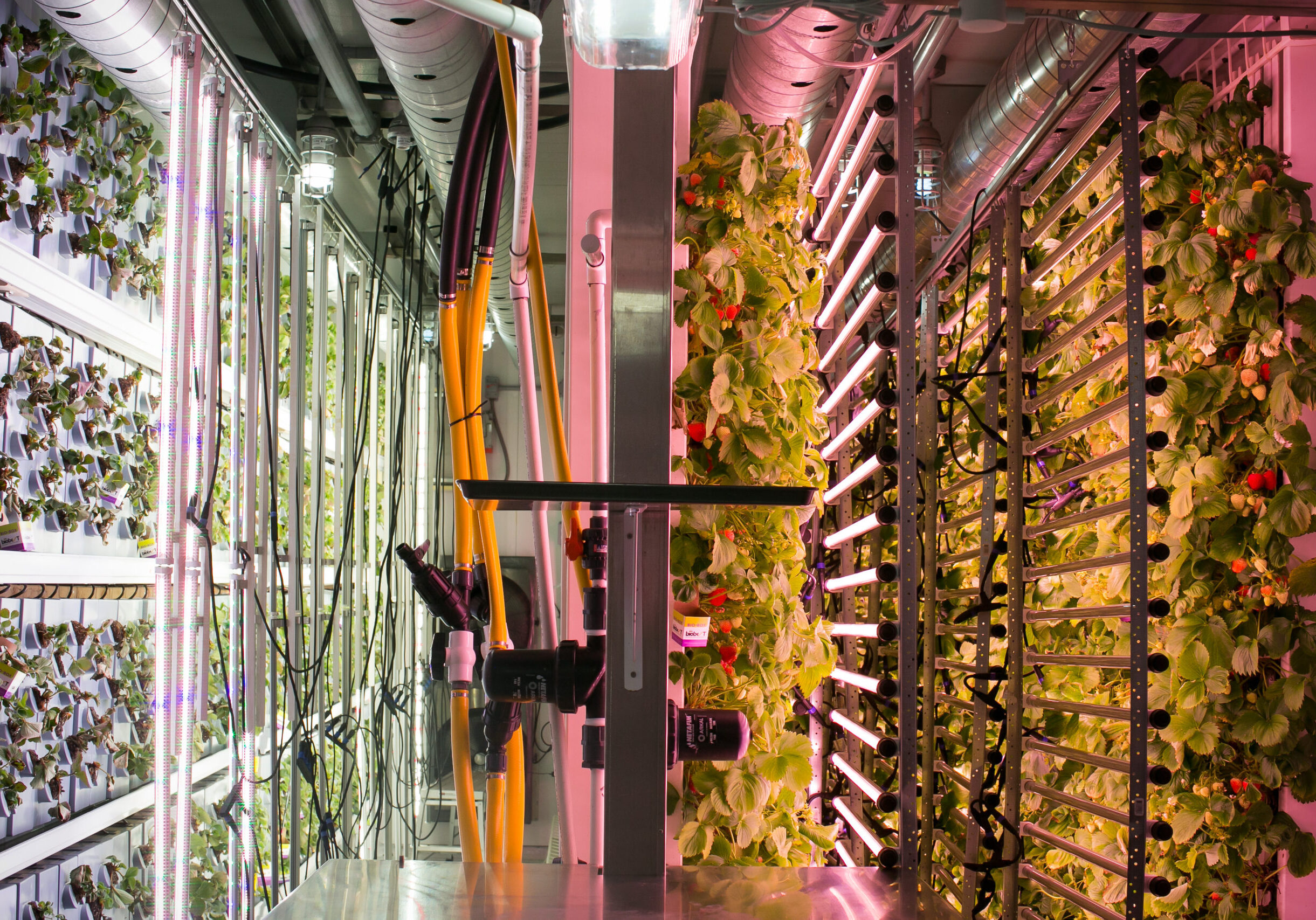
Ferme GUSH
Photo courtesy of Gush
This dynamism is rooted in a local economy and a strong model: the industrial retailer, who combines production with direct sales. Another example is Matelas Sélection, a Montréal-based manufacturer that sources its textiles from Tonitex just down the street, and its zippers from Canzip only a few minutes away. For a coffee break, the team heads to their neighbor, Terra Café. In return, many clients from the artistic community based in the district buy directly from them. More than 70% of their suppliers are located within a few kilometers. This short supply chain reflects a simple logic: bringing production and consumption closer together to strengthen resilience.
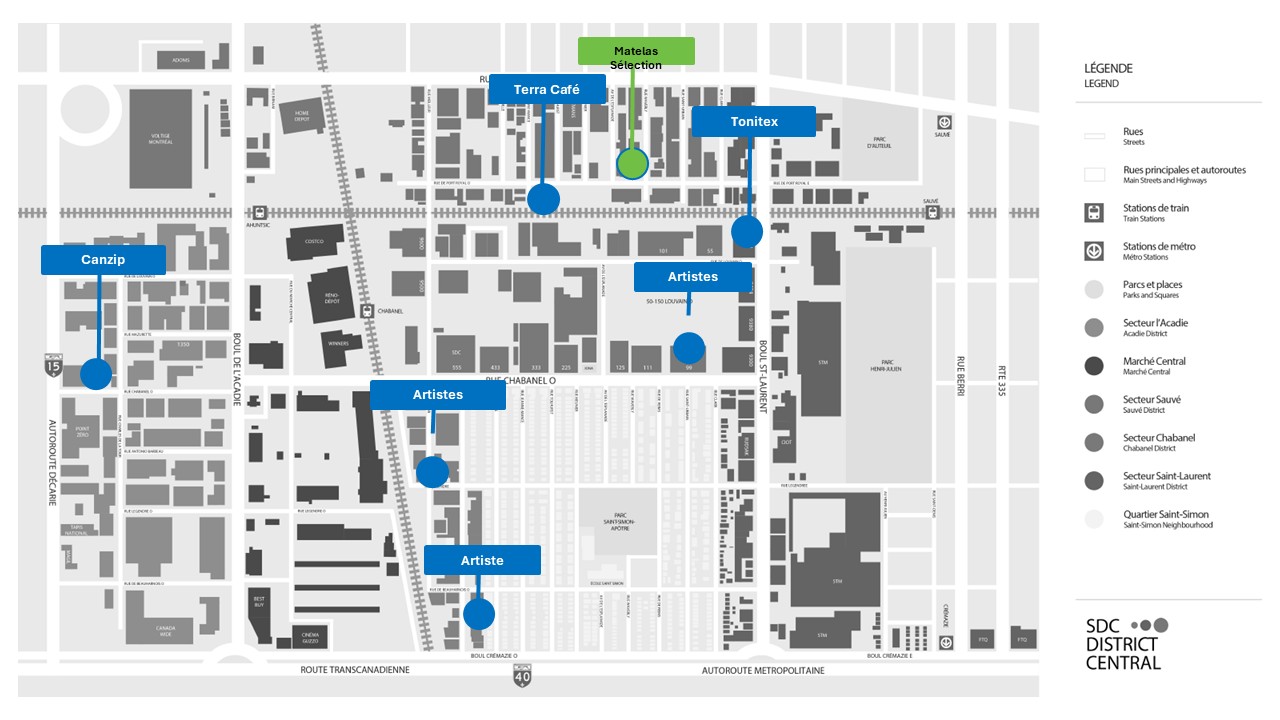
Example of Matelas Sélection's short suply chain
Very real challenges: cohabitation and logistics
Increasing the mix of uses in a dense industrial district brings complex issues: heavy trucks and tractor-trailers sharing space with cyclists and pedestrians, urban logistics, and ecological transition. The rushed installation of a bike lane in 2024—without consultation—was a striking example: congestion, blocked deliveries, declining sales… and a loss of trust in the administration. This situation is a reminder of how essential coordinated planning and continuous dialogue are to ensure that the desire for sustainable mobility does not become an obstacle to economic vitality or a source of division.
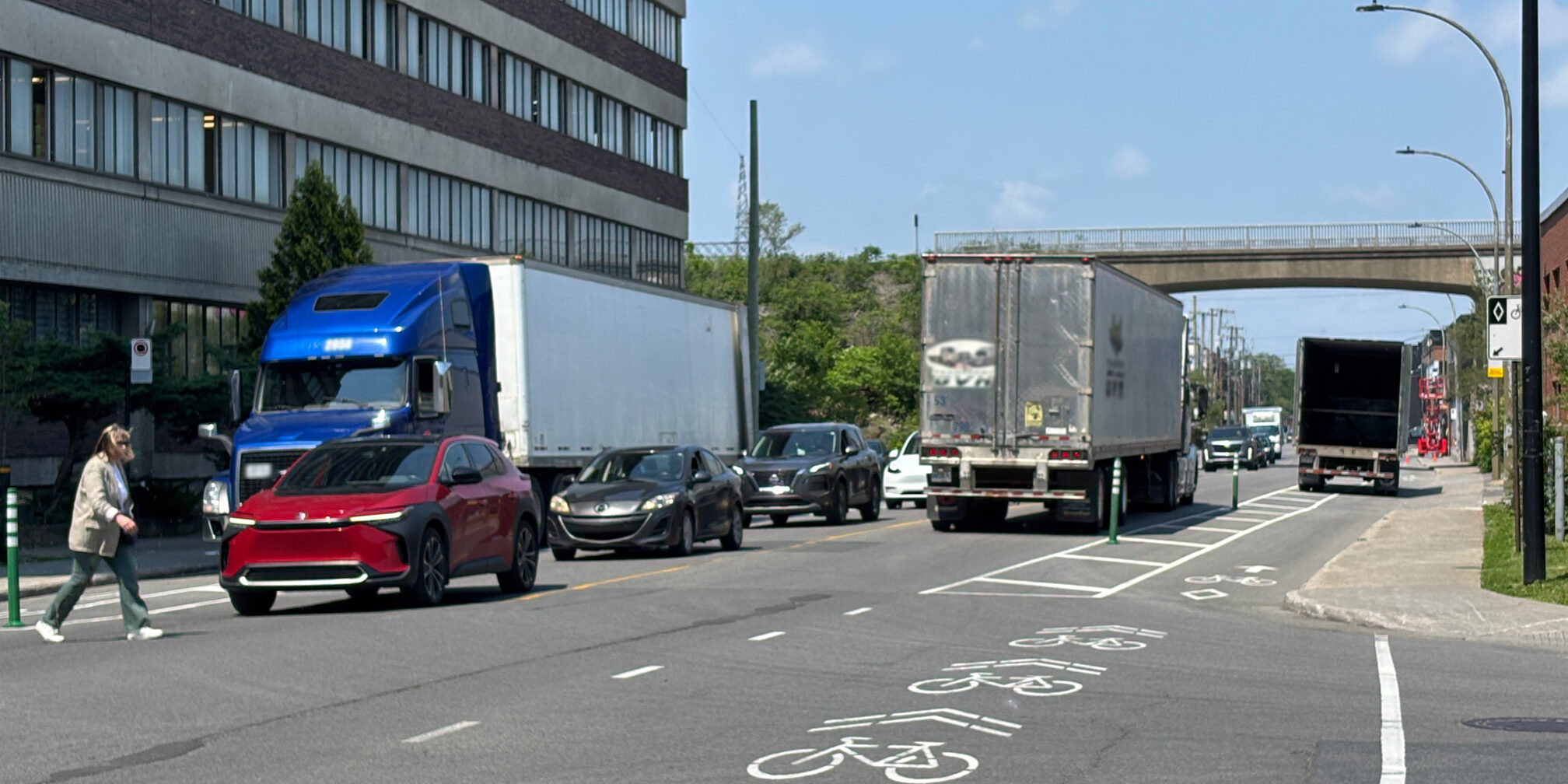
Toward inclusive and coordinated mixed use
Mixed use is expanding with residential projects such as ANIMA, which will include 1,200 housing units integrated with shops and community spaces. And at the heart of the district, a 60,000-square-meter vacant lot is the focus of the international C40 – Reinventing Montréal competition. In the meantime, temporary uses such as Esplanade Louvain and La Prairie Louvain (an 18,000-sq-ft flower field) create spaces for gathering and community engagement. These initiatives are more than temporary—they are laying the groundwork for sustainable development and illustrate the SDC’s strategy of testing hybrid uses before making them permanent.
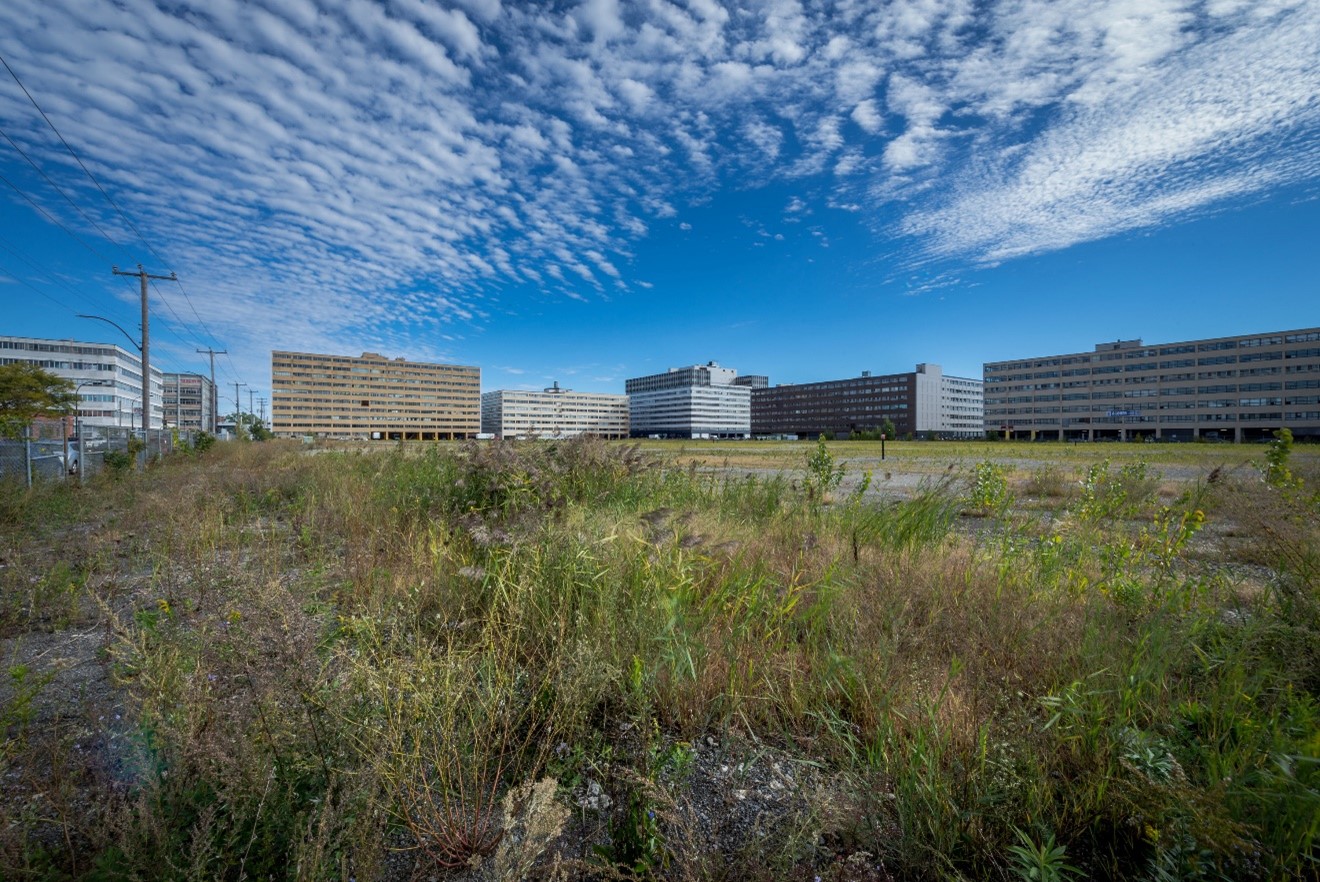
The 60,000-sq-ft vacant lot at 150 Louvain W.
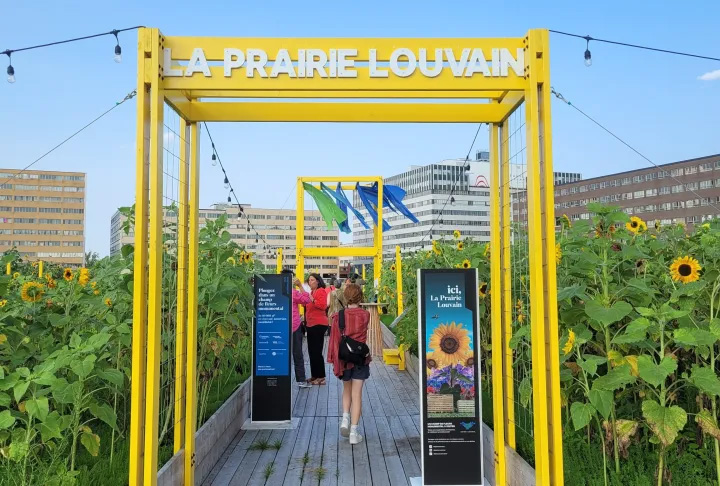
La Prairie Louvain
A community mobilized to co-create
The transformation of District Central is not being imposed—it is being co-constructed. An ideation charrette in 2021, an economic ethics charter currently in development to prevent gentrification… The companies that choose this district are part of this collective approach. “Innovation is born from dialogue,” the SDC emphasizes, acting as a catalyst to make District Central a metropolitan innovation zone where density and mixed use generate lasting synergies.
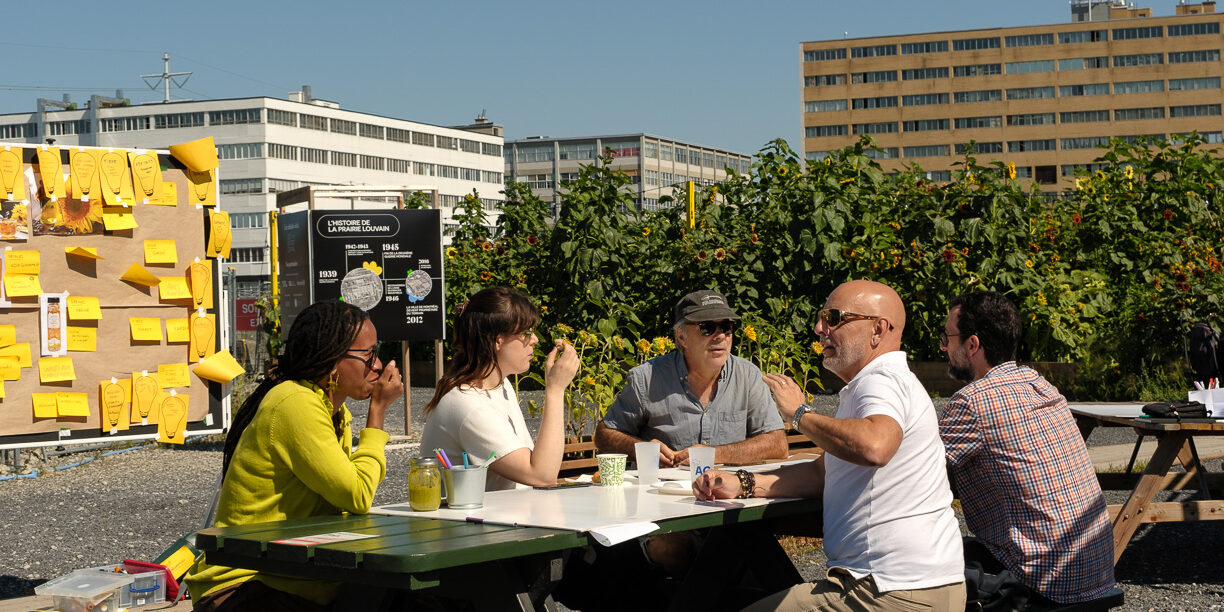
Co-design workshop at La Prairie Louvain
A human-centered strategy above all
Intensifying land use isn’t about stacking square meters—it’s about bringing people and activities closer together, preserving diversity, and creating synergies to build resilient, inclusive, and thriving neighborhoods. District Central demonstrates that it is possible to generate greater value without urban sprawl by embracing a coordinated approach that keeps people at the center.
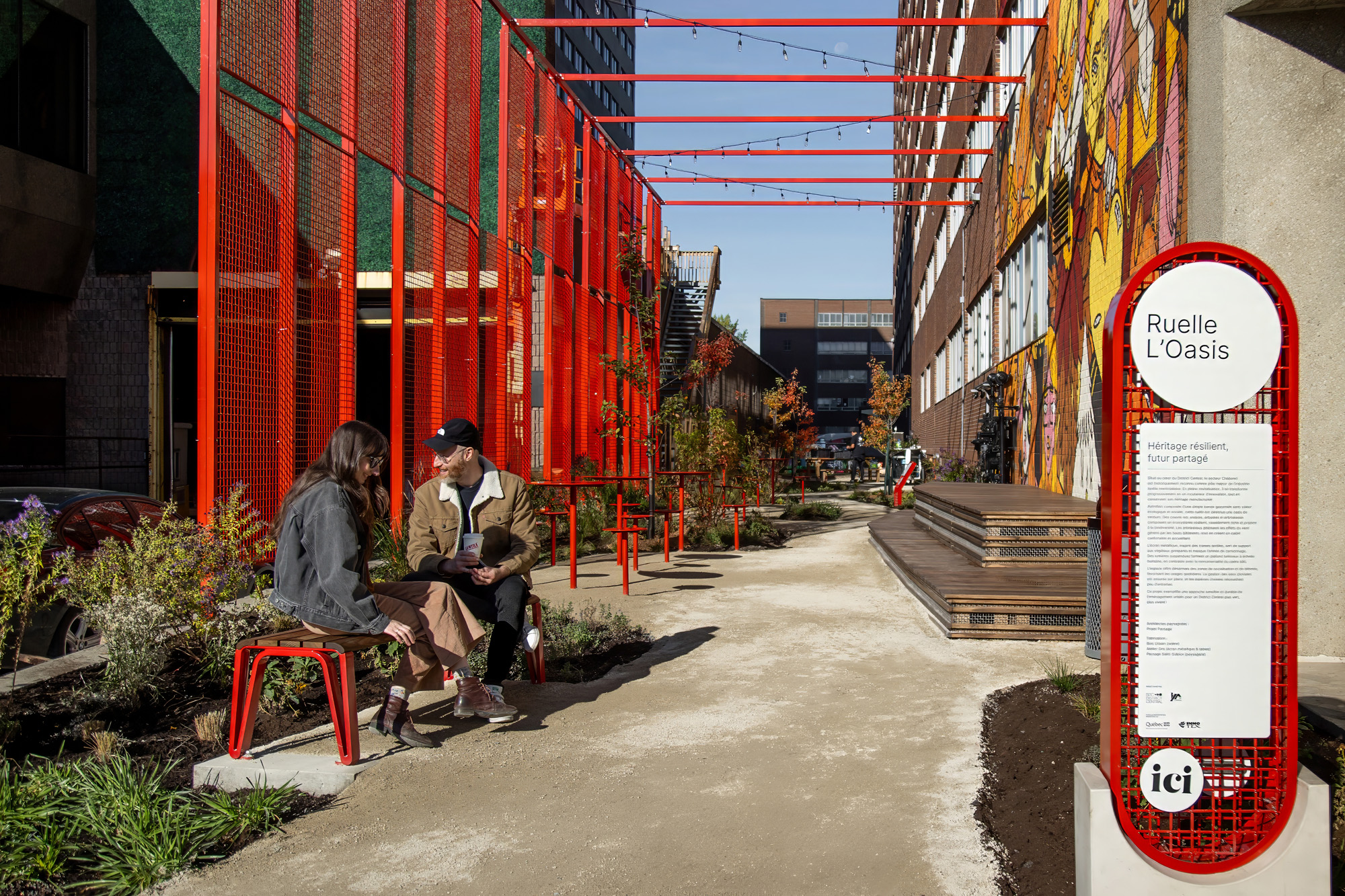
Ruelle L’Oasis, a landscaped interstice between two buildings on Chabanel W.
To conclude, Hélène Veilleux shared the following inspiring avenues for action with the economic developers of the Brittany region:
- Invest in vertical density and optimize the built environment
- Conduct a genuine urban logistics assessment
- Test hybrid uses before making them permanent
- Leverage vacant spaces as drivers of innovation
- Support industries that contribute to a solutions-based economy, such as urban agriculture for food sovereignty and local production
- And above all, mobilize and co-create with local stakeholders
"The lessons learned from District Central are very inspiring for the territories of Brittany. Despite the difference in scale between Montréal and the Breton intercommunalities that are part of the developers’ network, the initiatives undertaken by the economic actors of District Central represent, in our view, a concentrated showcase of innovative uses that reconcile space intensification with the deployment of productive activities, all within a sustainable approach. The SDC District Central team’s role as a project catalyst is also an example to follow for enhancing economic development in our Breton territories."
— Pierre-Yves Lefebvre, Territorial Economic Development Officer, Région Bretagne
"As the leader of PALME, I can say that the approach of the SDC illustrates solutions that can address the various challenges within the PALME network: repurposing spaces, sustainability, and multi-use activities where appropriate, all based on clear governance and ongoing territorial dialogue. Designing the business park of tomorrow does not mean erasing the past, but rather using it, drawing inspiration from it to create spaces that are viable, livable, and even desirable. The project led by the SDC District Central is an excellent demonstration of this."
— Marc De Nale, Chief Executive Officer, PALME
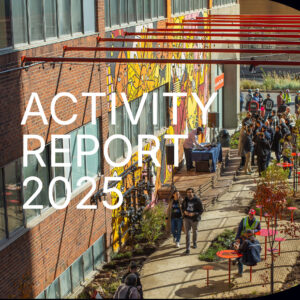
2025 Activity Report – Highlights
MESSAGE FROM THE CHAIR OF THE BOARD AND THE EXECUTIVE DIRECTOR 2025 was a year of courage and cohesion for the District Central. Driven by a major realignment and a…
Read More
Together Toward a Territorial Resilience Plan for District Central
The SDC District Central is embarking on a large-scale project to create its Territorial Resilience Plan for 2027-2030. As a recognized metropolitan innovation zone and a key economic driver for…
Read More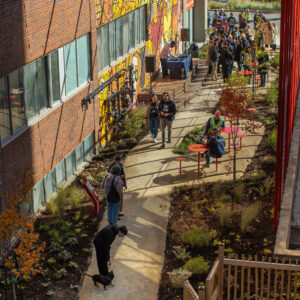
AGM 2026 – Notice of meeting
Invitation – AGM 2026 DISTRICT CENTRAL BUSINESSES, THIS EVENT IS FOR YOU! Join the members of the Board of Directors and the SDC District Central team for an in-person Annual…
Read More